When and How Should Babies First Eat Peanut and Egg?
Research and US pediatric allergy guidance now suggest introducing peanut and well-cooked egg during the first year of life, often around 6 months once your baby is ready for solids, rather than delaying them.
Written By: DocAi Health Editorial Team
Last Updated: 2026-09-23
Research and US pediatric allergy guidance now suggest introducing peanut and well-cooked egg during the first year of life, often around 6 months once your baby is ready for solids, rather than delaying them. Babies with severe eczema or an egg allergy are at higher risk of peanut allergy and should see their pediatrician or an allergist before any peanut is offered. This article covers when to start, how to prepare these foods safely, what an allergic reaction looks like, and when to call 911.
When to introduce peanut and egg to your baby
For many years, families were told to hold back peanut and egg until a child was one, two or even three years old. That advice has shifted. The LEAP trial (Du Toit et al., New England Journal of Medicine, 2015, listed in Sources) studied peanut consumption in infants at risk for peanut allergy and found that early, regular peanut feeding was associated with a lower rate of peanut allergy in high-risk babies. Guideline groups in the US have since moved toward earlier introduction.
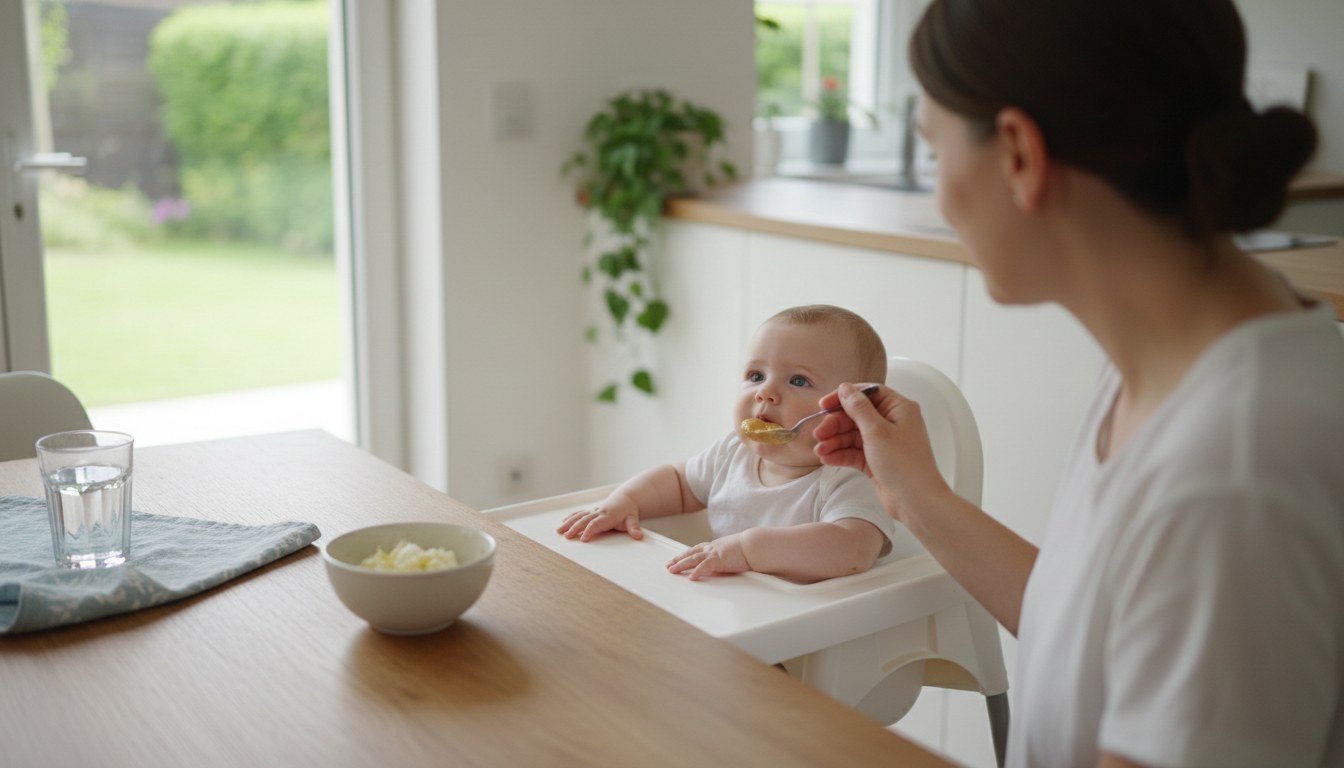
In many cases, the suggested window is around 6 months of age, when your baby shows readiness for solid food. Readiness usually includes sitting with support, good head control, interest in food, and the ability to move food from a spoon to the back of the mouth. Some babies are ready a little earlier or later, and your pediatrician can help you judge. Guidelines also advise against holding peanut and egg back past the first year without a reason.
Introducing these foods does not replace breast milk or formula, which remain the main source of nutrition through the first year. MedlinePlus (NIH) has an overview of infant and newborn nutrition that covers the basics of starting solids.
Check your baby's allergy risk first
How early and how carefully you start can depend on your baby's risk. Several factors contribute to food allergy, and the mechanism is not fully understood. Clinicians generally think about three broad groups.
- Higher risk: severe eczema, an existing egg allergy, or both. The LEAP trial focused on infants with severe eczema, egg allergy, or both. Pediatric allergy guidelines generally suggest that these babies be evaluated by a pediatrician or allergist before peanut is offered. After that evaluation, peanut introduction is generally considered at about 4 to 6 months, following the plan your pediatrician or allergist gives you. Do not start peanut at home before that evaluation.
- Moderate risk: mild to moderate eczema. Guidelines generally suggest introducing peanut around 6 months, and it is reasonable to talk with your pediatrician first.
- Lower risk: no eczema and no known food allergy. Peanut can generally be introduced with other solids once your baby is ready, in line with your family's preferences.
If your baby has severe eczema or has already reacted to a food, tell your pediatrician before offering peanut so they can decide whether testing or a supervised first feeding is appropriate. Do not assume a baby with eczema must avoid peanut, and do not start on your own if a reaction has already happened. For background on eczema itself, see our article on childhood eczema, and for what reactions look like, see our article on signs of a food allergy in babies.
How to offer peanut safely
Whole peanuts, chunks of peanut, and spoonfuls of thick peanut butter are choking hazards for babies and should not be given. Peanut should be offered in a form that is smooth and thin enough to swallow safely. Some common approaches are:
- Thin a small amount of smooth peanut butter with warm water, breast milk or formula until it is a runny puree.
- Stir peanut powder or peanut flour into a familiar puree, cereal or yogurt.
- Use a dissolvable peanut puff product made for infants, softened as the label directs.
Do not give a baby a spoonful of thick peanut butter straight from the jar, because it can stick in the mouth and throat. Thinned peanut butter or peanut powder are the usual choices instead of whole nuts or thick spoonfuls.
It helps to know infant choking first aid before the first feeding. If a baby cannot cry, cough or breathe, have someone call 911 right away, or put your phone on speaker if you are alone. Lay your baby face-down along your forearm, supporting the head and jaw with the head lower than the chest, and give 5 back blows between the shoulder blades. Then turn your baby face-up, still supporting the head, and give 5 chest thrusts with two fingers on the breastbone. Repeat until the food comes out or your baby becomes unresponsive, and if that happens, begin infant CPR as the dispatcher directs. Abdominal thrusts are not used on infants. A hands-on infant first aid class can teach the technique, and see our article on helping a choking child or infant.
Ask your pediatrician what amount to offer and how often. The trial protocols used regular, repeated feedings rather than a single taste, and the right plan depends on your baby's risk group, so your clinician can tell you how that applies to your baby.
How to offer egg safely
Egg is a common early food allergen too. Current pediatric guidance generally favors offering egg that is well cooked, such as hard-boiled egg mashed into a smooth texture, or scrambled egg cooked until firm. Egg that is baked into foods is sometimes tolerated by children who react to less cooked egg, but that is a decision to make with your clinician if your baby has reacted before.
Avoid raw or runny egg for babies because of the risk of foodborne illness. Do not offer hard chunks of egg white or yolk that could be a choking risk.
A practical way to run the first feeding
Whichever food you start with, a few habits make a first feeding easier to manage.
- Choose a good day. Pick a time when your baby is well, hungry but not frantic, and when you are not rushed. Avoid starting just before a nap, bedtime or a daycare drop-off.
- Offer a tiny first taste. Start with a small amount and watch your baby, then continue if there are no concerning signs.
- Stay with your baby afterward. Many immediate (IgE-mediated) reactions begin within minutes to a couple of hours of eating, so stay close during that time rather than leaving your baby with a caregiver who does not know the signs. Delayed patterns such as FPIES can start a few hours later, so keep watching.
- Introduce one new allergen at a time. That way, if a reaction happens, you know which food is the likely cause.
- Keep it in the diet. Guidance for peanut in the studies involved regular ongoing exposure, so ask your pediatrician how often to continue once your baby has tolerated it.
What an allergic reaction can look like
Reactions range from mild to life-threatening. Mild reactions can include a few hives around the mouth, a blotchy rash, or a bit of facial redness. Some babies spit up or vomit once. Because babies commonly have messy faces and reflux, it can be hard to tell. MedlinePlus has a page on reflux in infants that explains why spitting up on its own is common.
More serious reactions can involve several body systems at once. Warning features include widespread hives, swelling of the lips, tongue or face, repeated vomiting, persistent coughing or wheezing, noisy or difficult breathing, unusual paleness or floppiness, or sudden sleepiness or unresponsiveness. Hives or swelling together with any symptom from another body system after a new food, such as vomiting, breathing trouble, paleness or unusual sleepiness, can be anaphylaxis and needs emergency care, as do symptoms that are quickly getting worse. Anaphylaxis can also occur without hives. Widespread hives in a baby with a known food allergy should be handled as the clinician's allergy action plan directs, which may include epinephrine and a 911 call, especially if any other symptom appears. MedlinePlus explains anaphylaxis, including that epinephrine is the main emergency treatment.
A different pattern is a delayed reaction. Food protein-induced enterocolitis syndrome (FPIES) can cause repeated vomiting a few hours after eating, with pallor and lethargy, and no hives. Because this pattern can lead to dehydration and shock in infants, repeated vomiting with unusual sleepiness, limpness or pallor after a new food needs emergency evaluation. Bloody stool or ongoing feeding refusal after a new food should be discussed with a clinician promptly. Persistent trouble swallowing or poor feeding over time can also have other causes, such as eosinophilic esophagitis, described by MedlinePlus.
What to do if your baby has a reaction
If you see signs of a severe reaction, stop feeding, call 911, and follow the instructions given by the dispatcher. Epinephrine is the first-line treatment for anaphylaxis. If a clinician has prescribed an epinephrine auto-injector for your baby, give it right away as your clinician's written action plan describes, then call 911 (or have someone call while you inject). Follow the dispatcher's advice about a second dose, and stay for emergency evaluation even if your baby improves, because symptoms can return. The strength is prescribed by your clinician for your baby's weight, so review the plan and the device with your prescriber or pharmacist before an emergency happens.
Antihistamines such as diphenhydramine (Benadryl) do not treat anaphylaxis, and giving one should not delay 911 or epinephrine. While waiting for help, lay your baby flat on their back, or on their side if they are vomiting, unless breathing is easier in a position of comfort, and follow the dispatcher's instructions. A sudden drop in blood pressure can worsen when a baby is held upright. Do not wait to see if symptoms pass.
For a mild reaction, such as a few hives near the mouth with an otherwise comfortable, playful baby, stop the food, watch closely, and call your pediatrician the same day. Do not give the food again until a clinician has advised you. Testing, such as skin prick tests, blood tests or a supervised food challenge, can help clinicians sort out true allergy from a harmless rash, though no single test settles it alone. They combine your baby's history, an examination and testing.
If you suspect your baby may be sensitive to a food, avoiding it without an evaluation can sometimes leave a child with unnecessary restrictions, and the opposite can be risky too, so a conversation with the pediatrician or an allergist is the safest route.
Other points families often ask about
Delaying other foods. There is no evidence-based need to delay other common foods such as dairy, wheat or fish in most babies, though your pediatrician can advise on your baby's case.
Family history. A parent or sibling with a food allergy can raise a baby's risk, so mention it to your pediatrician before starting.
Maternal diet. Research summaries on peanut allergy prevention, such as a review in the NIH's PubMed Central, focus mainly on feeding the baby directly, and your clinician can tell you how that applies to breastfeeding.
Product quality. Use commercial peanut butter and peanut products from reputable manufacturers, and discard products that look moldy or smell off, because spoiled peanuts can carry mold toxins.
When to Seek Medical Care
When to Seek Urgent or Emergency Care
A food allergy reaction in a baby can progress quickly from skin symptoms to trouble breathing or circulation, so the first list is for signs that need an emergency response right now. This guidance is in addition to, not a replacement for, the general disclaimer above.
Emergency, call 911 or go to the emergency room immediately if:
- Your baby has noisy, labored or struggling breathing, repeated coughing, or wheezing soon after eating peanut, egg or any new food.
- Your baby's lips, tongue, face or throat swell, or the voice or cry becomes hoarse or weak after a new food.
- Your baby becomes limp, unusually pale or blue, hard to wake, or unresponsive after eating a new food, so call 911 and follow the dispatcher's instructions.
- Hives or swelling appear together with any symptom from another body system after a new food, such as vomiting, breathing trouble, paleness or unusual drowsiness, or symptoms are getting worse quickly, or your baby with a known food allergy has widespread hives, which can be anaphylaxis, so give a prescribed epinephrine auto-injector right away as the written action plan directs rather than an antihistamine, then call 911 (or have someone call while you inject), and stay for emergency evaluation even if your baby improves.
- Your baby has repeated vomiting with unusual sleepiness, limpness or pale skin, especially a few hours after a new food, which can be a dangerous delayed reaction such as FPIES and needs emergency evaluation.
- Your baby is choking and cannot cry, cough or breathe, so have someone call 911 right away, give 5 back blows face-down on your forearm with the head lower than the chest, then 5 chest thrusts face-up, and begin infant CPR if your baby becomes unresponsive.
See a doctor soon (same-day or next available appointment) if:
- A few hives or a blotchy rash appeared around the mouth or face after peanut or egg, but your baby is breathing comfortably and acting like themselves, so call your pediatrician the same day.
- Your baby vomited once after a new food with no other symptoms and seems well, so watch closely for several hours for repeated vomiting, paleness or unusual sleepiness, which need emergency care, and tell your pediatrician before offering that food again.
- Your baby has severe eczema or a prior food reaction and you have not yet discussed starting peanut or egg with your pediatrician, so schedule that visit before you begin.
- Your baby has blood in the stool, ongoing feeding refusal, or persistent eczema flares after introducing a new food, and you want the pattern checked.
- Your baby has looser stools or mild fussiness after a new food but is feeding, wetting diapers and acting normally, so mention it to your pediatrician at the next available visit.
Frequently Asked Questions
What age should I give my baby peanut?
Many pediatric allergy guidelines suggest introducing peanut around 6 months, once your baby is ready for solids. Babies with severe eczema or an egg allergy are at higher risk and should be evaluated by a pediatrician or allergist first. After that evaluation, introduction is generally considered around 4 to 6 months, following your clinician's plan. Do not start peanut at home before that evaluation.
Can I give my baby peanut butter straight from the jar?
No. Thick peanut butter can stick in a baby's mouth and throat and is a choking hazard. Thin a small amount of smooth peanut butter with warm water, breast milk or formula into a runny puree, or stir peanut powder into a familiar food. Whole peanuts and chunks should also be avoided. Your pediatrician can advise on the best form for your baby.
Is it safe to give my baby egg?
Egg is generally offered once a baby is ready for solids, in a well-cooked form such as mashed hard-boiled egg or firm scrambled egg. Avoid raw or runny egg because of foodborne illness risk. If your baby has eczema, a prior food reaction or a family history of allergy, tell your pediatrician before the first feeding so they can advise you.
What does a peanut or egg allergy reaction look like in a baby?
Mild reactions can include a few hives around the mouth, a blotchy rash or one episode of vomiting on its own. Serious signs include widespread hives, swelling of the lips, tongue or face, hives plus vomiting or other symptoms, wheezing or noisy breathing, paleness, floppiness or unusual sleepiness. Serious signs need 911. A mild rash in a playful baby calls for a same-day pediatrician call.
Should I give Benadryl if my baby has a reaction?
Antihistamines such as diphenhydramine do not treat anaphylaxis and should not replace emergency care. If your baby has signs of a severe reaction and a clinician prescribed an epinephrine auto-injector, give it right away as the written action plan directs, then call 911. For a mild rash, ask your pediatrician or pharmacist about any medicine and the right amount for your baby's age.
What should I do while waiting for the ambulance?
Stop feeding and call 911. Lay your baby flat on their back, or on their side if they are vomiting, unless breathing is easier in a position of comfort, and follow the dispatcher's instructions. If your clinician prescribed an epinephrine auto-injector, it should already have been given right away as the written plan directs. Even if your baby improves, they still need emergency evaluation. Tell responders what food your baby ate.
Can my baby eat peanut if they have eczema?
Often yes, but the plan depends on severity. Babies with severe eczema, an egg allergy, or both are higher risk and should be evaluated by a pediatrician or allergist before peanut is offered. Babies with mild to moderate eczema can generally start around 6 months, and talking with your pediatrician first is reasonable. Do not assume eczema means peanut must be avoided.
Related articles
Signs of a Food Allergy in Babies: What Parents Should KnowChildhood Eczema: Triggers, Symptoms, and ManagementHow Do You Help a Choking Child or Infant? First Aid Steps by AgeSources
- MedlinePlus (NIH) - Infant and Newborn Nutrition
- MedlinePlus (NIH) - Anaphylaxis
- MedlinePlus (NIH) - Reflux in Infants
- MedlinePlus (NIH) - Eosinophilic Esophagitis
- PubMed Central (NIH) - Randomized trial of peanut consumption in infants at risk for peanut allergy
- PubMed Central (NIH) - Peanut Allergy in Children-Is Prevention Better than Cure?