Toddler Night Terrors: Why They Scream in Their Sleep and Don't Remember
Night terrors happen when a toddler's brain is caught between deep sleep and waking. The child screams, thrashes, or sits up with eyes open but stays largely asleep, not fully aware or responsive.
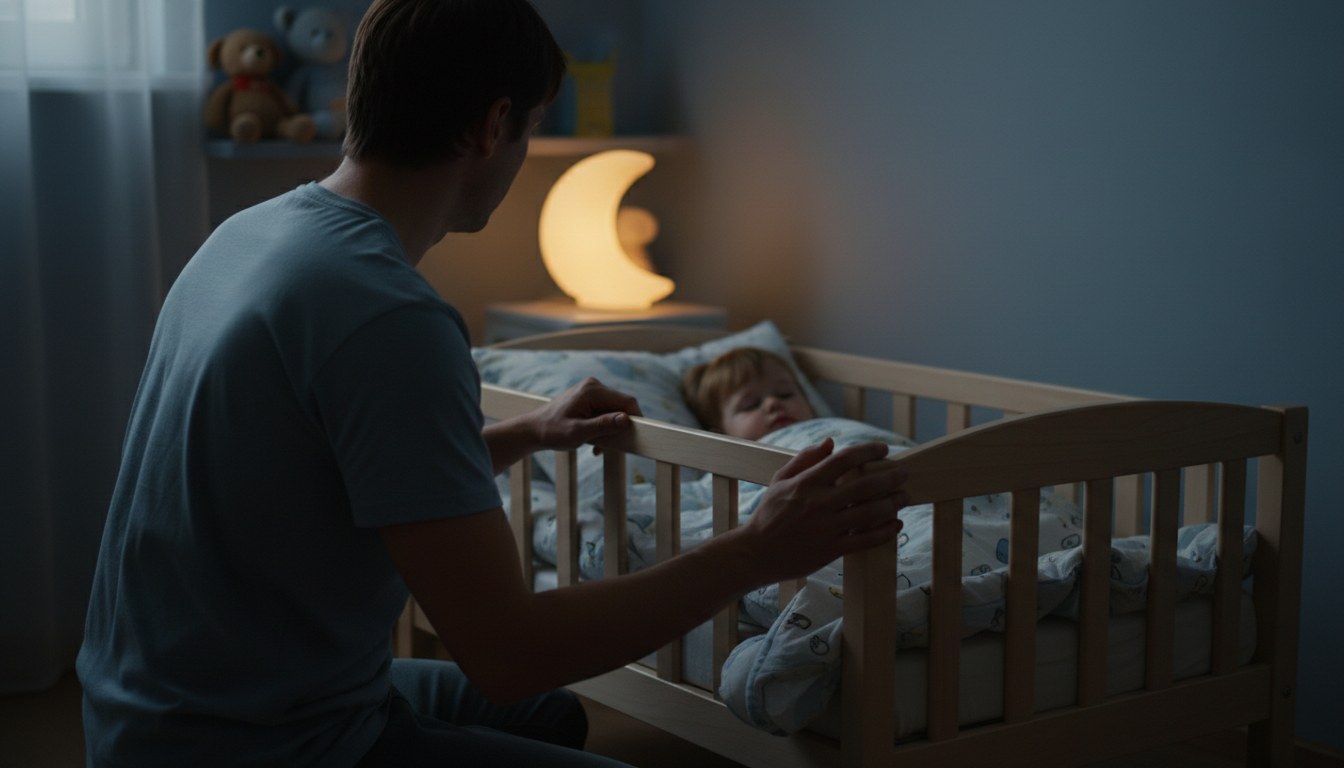
Children's HealthSleep & Night Terrorssymptom-check
Written By: DocAi Health Editorial Team
Last Updated: 2026-09-30
Last Updated: 2026-09-30
Medical Disclaimer: This article is for general informational and educational purposes only and is not medical advice. It does not create a doctor-patient relationship and is not a substitute for professional diagnosis or treatment by a qualified healthcare provider. Never disregard or delay seeking professional medical advice because of something you have read here. If you think you may have a medical emergency, call 911 or your local emergency number right away. Health information can change and this guidance is general and US-focused, so consult a licensed clinician in your own country about your specific situation.
Night terrors happen when a toddler's brain is caught between deep sleep and waking. The child screams, thrashes, or sits up with eyes open but stays largely asleep, not fully aware or responsive. They are most common in toddlers and preschoolers, generally happen early in the night, and often last a few minutes to about 20 minutes. Children usually remember little or nothing of an episode, and most outgrow them. Stiffening, jerking, or trouble breathing are not typical and need emergency care. This article covers what can contribute to night terrors, how they differ from nightmares, and when to call the pediatrician.
What Is Happening During a Night Terror
A night terror is not a bad dream. It is a partial arousal, a moment where your toddler's brain gets pulled halfway out of deep sleep without fully waking up. Mayo Clinic describes it as a parasomnia, an unusual behavior during sleep, in which the child may look awake but remains partially asleep. That half-woken state is why the episode looks so alarming and why nothing you say may seem to reach your child. The body can act awake and terrified: sitting up, screaming, thrashing, sweating, breathing fast, heart pounding, eyes wide open. Your toddler may not recognize you, respond to your voice, or form a memory of the moment.
Fast breathing and a racing heart are a common part of an episode. Actual gasping, choking, or real pauses in breathing are different. Treat those as a reason to call 911 or go to the emergency room, since they point to something other than a typical night terror.
Episodes generally happen in the first part of the night, during a deep stage of non-REM sleep. MedlinePlus describes a spell of 10 to 20 minutes, Mayo Clinic describes seconds to a few minutes that sometimes run longer, and the American Academy of Pediatrics says some last as long as 45 minutes, though most are much shorter. Afterward, most children fall back asleep, often without truly waking. In the morning, children usually have little or no memory of the screaming, of you standing beside the bed, or of the fear you watched on their face.
Night Terrors Are Not Nightmares
Parents often use the two terms interchangeably, but they come from different parts of the sleep cycle and look different in the moment.
A nightmare usually happens during REM sleep and, according to the American Academy of Pediatrics, often occurs in the second half of the night, when dreaming is most intense. A child having a nightmare wakes up fully, is often able to describe what scared them, and can usually be comforted with a hug and a few reassuring words. They may remember the dream the next day.
A night terror happens during deep non-REM sleep, generally earlier in the night. Your child stays largely asleep through it, does not respond normally to comfort, and usually has little or no memory of the episode the next morning. If you try to hold or soothe a toddler mid-terror, they may push you away, cry harder, or seem to look right through you. That is a common part of an episode.
What Can Contribute to an Episode
Doctors do not fully know why some toddlers have night terrors and others do not. MedlinePlus and Mayo Clinic list lack of sleep, stress, and fever among the things that may contribute, and a few other patterns are worth knowing:
- Not enough sleep. An overtired toddler, one who skipped a nap or went to bed late, may be more likely to have an episode. Sleep is one factor many families can adjust.
- Fever and illness. An episode during a fever can still look like ordinary screaming, thrashing, and confusion. If instead you notice your toddler's body going stiff, jerking rhythmically, their eyes rolling back, or their lips or face turning blue or gray, treat that as a possible seizure and get emergency care. Our guide to febrile seizures in children explains what a febrile seizure looks like.
- A disrupted or irregular sleep schedule. Travel, a new sibling, moving out of a crib, or an inconsistent bedtime routine can disrupt sleep and may make episodes more frequent for a while.
- Stress or a change in routine. Starting daycare, a new caregiver, or tension at home may show up as more restless sleep, including more night terrors. If new daytime clinginess, fearfulness, or other signs of anxiety in children are showing up alongside the sleep changes, mention the whole pattern at your child's next visit.
- Family history. Night terrors may run in families, and they are more common when relatives have a history of sleep terrors or sleepwalking. If you or your child's other parent had them as a child, that may raise the odds your toddler will too.
- An uncomfortable sleep environment. A room that is noisy or uncomfortable can interrupt sleep, and Mayo Clinic suggests keeping the bedroom comfortable and quiet.
These factors do not mean something is wrong with your child. When a fever comes with an episode, the temperature and your child's other symptoms decide how urgent it is. A fever around 104°F (40°C) or higher deserves prompt medical advice, especially if it persists or recurs: the American Academy of Pediatrics advises calling your child's doctor right away when a temperature rises above 104°F (40°C) repeatedly. Call 911 or go to the emergency room if your toddler is unusually limp, floppy, or very hard to wake after the episode, has trouble breathing, has a seizure, or looks severely ill. A stiff neck, repeated vomiting, or a rash that does not fade when you press on it, alongside a fever, also needs emergency care; the American Academy of Pediatrics lists these among the reasons to call your child's doctor right away. Our guide to fever in children covers more.
For a seizure, the CDC advises calling 911 if it lasts longer than five minutes, if another seizure follows soon after, if there is trouble breathing or waking up afterward, if the person is injured or the seizure happens in water, or if it is the person's first seizure. The National Institute of Neurological Disorders and Stroke names a stiff neck, extreme sleepiness, breathing problems, or a lot of vomiting as meningitis symptoms that make care after a first febrile seizure especially urgent.
What to Do While It Is Happening
The instinct to scoop up a screaming toddler and shake them awake is strong. Mayo Clinic advises against it: trying to wake your child, or to keep your child from moving, may make things worse, and the episode will usually stop on its own. Waking a child mid-terror can leave your toddler confused and harder to settle.
- Stay in the room and make sure your child cannot fall out of bed, hit a hard edge, or reach the stairs if they get up and move around. A gate across the stairs and a floor clear of things to trip on can help. If a fall or a hard bump to the head happens during an episode, treat it as its own injury and have it checked right away; the emergency box below and our guide to head injuries in children list the signs that need emergency care.
- Keep your voice low and calm, but do not expect eye contact, recognition, or a response that makes sense.
- Avoid holding your child tightly unless they are about to hurt themselves. Gentle physical guidance back toward the bed is fine, and the American Academy of Pediatrics advises gently restraining a child who tries to get out of bed, but a firm hold may make things worse. If your toddler is regularly getting hurt during episodes despite reasonable safety changes to the room, bring that up at the next visit.
- Wait it out. Mayo Clinic notes that sleep terrors can be frightening to watch and that an episode usually stops on its own. A child who stays hard to rouse, seems unusually drowsy, or keeps vomiting well after the episode should have ended needs medical attention right away.
- Because most children do not remember a night terror, there is usually no need to discuss the episode in detail the next morning unless your child asks about it.
Can You Reduce Them? Scheduled Waking and Sleep Habits
If your toddler's night terrors happen at about the same time on many nights, scheduled waking may help. Mayo Clinic calls it anticipatory awakening: waking the child about 15 minutes before the usual time of the episode, keeping them awake for a few minutes, then letting them fall back asleep. It may reduce episodes in some children when night terrors occur at a predictable time. A sleep diary that notes how many minutes after bedtime each episode starts can show whether the timing is consistent, and your pediatrician can tell you whether this approach is a good fit for your child.
Beyond that, the simplest step is to protect your toddler's sleep. Mayo Clinic suggests an earlier bedtime and a more regular sleep schedule if your child is not getting enough sleep, a quiet and calming routine before bed, and a comfortable, quiet bedroom. These steps may reduce how often episodes happen. If a fever or discomfort is interrupting sleep, follow the product label for any fever reducer and check with your pediatrician or pharmacist for the right product and amount for your child's age and weight.
Episodes that are unusually prolonged, increasingly frequent, disruptive, or different from your child's usual pattern should be discussed with the pediatrician.
Snoring, Breathing, and Other Reasons to Look Closer
If your toddler snores loudly most nights, seems to gasp for breath, or breathes through an open mouth during ordinary sleep, beyond what happens during the episode itself, mention it at the next visit. The National Heart, Lung, and Blood Institute notes that sleep apnea in children is often caused by large tonsils or adenoids, and Mayo Clinic lists sleep-disordered breathing, including obstructive sleep apnea, among the conditions that can contribute to sleep terrors. A pediatrician can help decide whether the breathing pattern needs a closer look, such as a sleep study or a visit with a specialist.
How Long Toddler Night Terrors Usually Last
MedlinePlus reports that night terrors are most common in children ages 3 through 7 and much less common after that, and Mayo Clinic notes they can happen anywhere from ages 1 to 12. Most children outgrow them, and MedlinePlus says episodes usually decrease after age 10. How often they happen varies from child to child. Occasional sleep terrors are not usually a cause for concern, according to Mayo Clinic, but it is worth talking with a doctor sooner if they happen more often, regularly disrupt sleep, or lead to safety concerns or injury.
Night terrors become less common as children get older. New, frequent, worsening, or disruptive episodes in an older child deserve medical evaluation, particularly if they cause injury or significant sleep disruption. Stiffening, jerking, or trouble breathing during an episode is not part of a typical night terror and belongs on the emergency list below.
When to Seek Medical Care
When to Seek Urgent or Emergency Care
On their own, night terrors are frightening to watch but usually not a cause for concern, and most children outgrow them without treatment. A few presentations during or after an episode are not typical night terrors and call for faster evaluation. This guidance is in addition to, not a replacement for, the general disclaimer above.
Emergency, call 911 or go to the emergency room immediately if:
- Your toddler's body goes stiff or jerks rhythmically, their eyes roll back, or their lips or face turn blue or gray. These can be signs of a seizure, which needs emergency care. Call 911 if it lasts longer than five minutes, if another seizure follows soon after, if your child has trouble breathing or waking up afterward, if your child is injured or the seizure happens in water, or if it may be your child's first seizure.
- Your child is gasping, choking, struggling to breathe, or seems to stop breathing, either during the episode or after it ends.
- Your toddler is unusually limp, floppy, or very hard to rouse once the episode is over, looks severely ill, seems unusually drowsy, or keeps vomiting well after the episode should have ended.
- Your toddler has a stiff neck, repeated vomiting, or a rash that does not fade when you press on it, together with a fever. These can point to a serious infection that needs emergency care.
- The episode follows a fall or a hard bump to the head, especially if your toddler loses consciousness, has a seizure, vomits repeatedly, or is confused or unusually sleepy.
See a doctor soon (same-day or next available appointment) if:
- Episodes are happening often, are becoming more frequent or more intense, or regularly disrupt your child's sleep or the sleep of others in the home.
- Episodes are unusually prolonged or different from your child's usual pattern.
- Your toddler snores loudly, seems to gasp, or appears to stop breathing during ordinary sleep, beyond what happens during the episode itself.
- Night terrors are showing up along with new daytime clinginess, fearfulness, or other signs of anxiety in children.
- Your toddler is regularly getting hurt during episodes despite reasonable safety changes to the room.
- Night terrors are new, frequent, or getting worse in an older child, or they cause injury or significant sleep disruption.
- Your toddler has a fever around 104°F (40°C) or higher. Call your child's doctor the same day, and right away if the fever persists or keeps coming back: the American Academy of Pediatrics advises calling right away when a temperature rises above 104°F (40°C) repeatedly.
Frequently Asked Questions
What age do toddler night terrors usually start and stop?
MedlinePlus reports that night terrors are most common in children ages 3 through 7, and Mayo Clinic notes they can happen anywhere from ages 1 to 12. Some toddlers have just a few episodes, while others go through stretches of more frequent ones. Most children outgrow them, usually by their teenage years, and MedlinePlus says episodes usually decrease after age 10.
Are night terrors the same as nightmares?
No. Nightmares usually happen during REM sleep, more often later in the night, and your child wakes up fully, often remembers the dream, and can be comforted. Night terrors happen during deep non-REM sleep, generally earlier in the night, and your child stays largely asleep, does not respond normally to comfort, and usually has little or no memory of the episode the next morning.
Should I wake my toddler during a night terror?
It is generally best not to. Mayo Clinic notes that trying to wake your child, or to keep your child from moving, may make things worse, and waking a child mid-episode can leave them confused and harder to settle. Stay close, keep them safe, speak softly and calmly, and let the episode end on its own.
Can a night terror actually be a seizure?
Occasionally what looks like a night terror is something else. If your toddler's body goes stiff or jerks rhythmically, their eyes roll back, their lips or face turn blue or gray, or they seem to lose consciousness instead of screaming and thrashing, treat it as a possible seizure and call 911 or go to the emergency room, particularly if it may be your child's first seizure, lasts longer than five minutes, is followed soon after by another seizure, or leaves your child struggling to breathe or wake up.
Does having night terrors mean my toddler has a sleep disorder?
Night terrors are classified as a parasomnia, a type of sleep disorder involving unusual behavior during sleep, but Mayo Clinic notes that occasional sleep terrors are not usually a cause for concern. They are worth a closer look if your child also snores loudly, seems to gasp or pause breathing during ordinary sleep, or has episodes that are frequent, prolonged, or getting worse.
Can a fever cause night terrors?
Fever is one of the things MedlinePlus and Mayo Clinic list as a possible contributor, although the exact cause of night terrors is not known. A fever-related night terror still looks like screaming, thrashing, and confusion. Stiffening, jerking, or loss of consciousness during a fever may be a febrile seizure instead, which needs emergency care.
How long does a typical episode last?
Sources vary: MedlinePlus describes 10 to 20 minutes, Mayo Clinic describes seconds to a few minutes that can sometimes run longer, and the American Academy of Pediatrics says some last as long as 45 minutes, though most are much shorter. An episode that is unusually prolonged, or that is becoming more frequent, is worth mentioning to your pediatrician.
Will my toddler remember the night terror in the morning?
Usually not. MedlinePlus and Mayo Clinic both report that children typically have little or no memory of a night terror the next morning, since they are not fully awake during it. There is usually no need to discuss the episode in detail unless your child asks about it.
When should I call the pediatrician about night terrors?
Call if episodes happen often, are becoming more frequent or longer, regularly disrupt sleep, cause or nearly cause injuries, or come with loud snoring, breathing pauses, or new daytime fearfulness or anxiety. Signs of a seizure or breathing trouble need emergency care, so call 911 or go to the emergency room, and an injury during an episode needs same-day or emergency evaluation instead of a routine appointment.
Related articles
Signs of Anxiety in Children Parents Often MissFebrile Seizures in Children: What Parents Should KnowBedwetting in Older Children: When Is It a Medical Issue?Sources
- MedlinePlus (NIH) - Night terrors in children
- Mayo Clinic - Sleep terrors (night terrors) - Symptoms and causes
- Mayo Clinic - Sleep terrors (night terrors) - Diagnosis and treatment
- American Academy of Pediatrics (HealthyChildren.org) - Nightmares, Night Terrors & Sleepwalking in Children: How Parents Can Help
- American Academy of Pediatrics (HealthyChildren.org) - Fever: When to Call the Pediatrician
- National Heart, Lung, and Blood Institute (NIH) - Sleep Apnea in Children
- National Institute of Neurological Disorders and Stroke (NIH) - Febrile Seizures
- Centers for Disease Control and Prevention (CDC) - First Aid for Seizures