Is a Vitamin D Level of 25 ng/mL Considered Deficient?
Short answer: a vitamin D level of 25 ng/mL is generally not classified as deficient. It sits above the deficiency cutoff used by every major guideline.
Written By: DocAi Health Editorial Team
Last Updated: 2026-07-19
Short answer: a vitamin D level of 25 ng/mL is generally not classified as deficient. It sits above the deficiency cutoff used by every major guideline. Whether it counts as fully "adequate" depends on which standard your doctor follows. By the National Institutes of Health framework, 25 ng/mL is adequate for most people. By the Endocrine Society framework, it falls in the "insufficient" range, meaning above deficiency but below their preferred target. Here is what that means for you.
What the Vitamin D Blood Test Measures
The standard test for vitamin D status is 25-hydroxyvitamin D, often written as 25(OH)D. This is the form that circulates in your blood and reflects the vitamin D you get from sunlight, food, and supplements combined. It is the marker labs and doctors use to decide whether your level is low, normal, or high.
In the United States, results are usually reported in nanograms per milliliter (ng/mL). Some labs and most other countries use nanomoles per liter (nmol/L). The two scales are easy to convert: 1 ng/mL is about 2.5 nmol/L, so a level of 25 ng/mL is roughly 62 nmol/L. A different test, 1,25-dihydroxyvitamin D, exists but is not used to check your everyday vitamin D status, so make sure you are reading the 25-hydroxyvitamin D number.
Vitamin D Ranges: Two Guidelines That Disagree
Part of the confusion around a result like 25 ng/mL is that two respected bodies draw their lines in different places. Both agree on what deficiency looks like at the very bottom, but they set the "good enough" bar differently.
| Organization | Deficient | Insufficient / Inadequate | Adequate / Sufficient |
|---|---|---|---|
| Institute of Medicine / NIH | Below 12 ng/mL (below 30 nmol/L) | 12-20 ng/mL (30-50 nmol/L) | 20 ng/mL and above (50 nmol/L and above) |
| Endocrine Society | Below 20 ng/mL (below 50 nmol/L) | 21-29 ng/mL (about 52-72 nmol/L) | 30 ng/mL and above (75 nmol/L and above) |
The Institute of Medicine, whose reference intakes the NIH Office of Dietary Supplements uses, concluded that a level of 20 ng/mL meets the bone-health needs of nearly all healthy people. The Endocrine Society, which wrote its guidance mainly for patients already at risk for deficiency, prefers a level of at least 30 ng/mL. Neither group treats 25 ng/mL as deficient.
So, Is 25 ng/mL Deficient? The Direct Answer
No. A level of 25 ng/mL is above both deficiency thresholds. Read through the NIH lens, it is in the adequate range. Read through the Endocrine Society lens, it is insufficient but not deficient, meaning it may be worth nudging higher in some people but is not a red flag on its own.
What actually matters is context. For a healthy adult with no symptoms and no special risk factors, 25 ng/mL is usually considered acceptable and may need nothing more than sensible sun, diet, and follow-up. For someone with osteoporosis, a malabsorption condition, a history of falls, or another reason to keep levels higher, a clinician may aim for 30 ng/mL or above and suggest a supplement. This is why the same number can prompt different advice from different doctors, and why the result should be read alongside your health history rather than in isolation. It is also worth knowing that recent expert guidance has questioned whether otherwise healthy adults need routine vitamin D testing at all, so whether the test was even necessary is a fair thing to ask your clinician.
What Can Cause a Low or Borderline Vitamin D Level
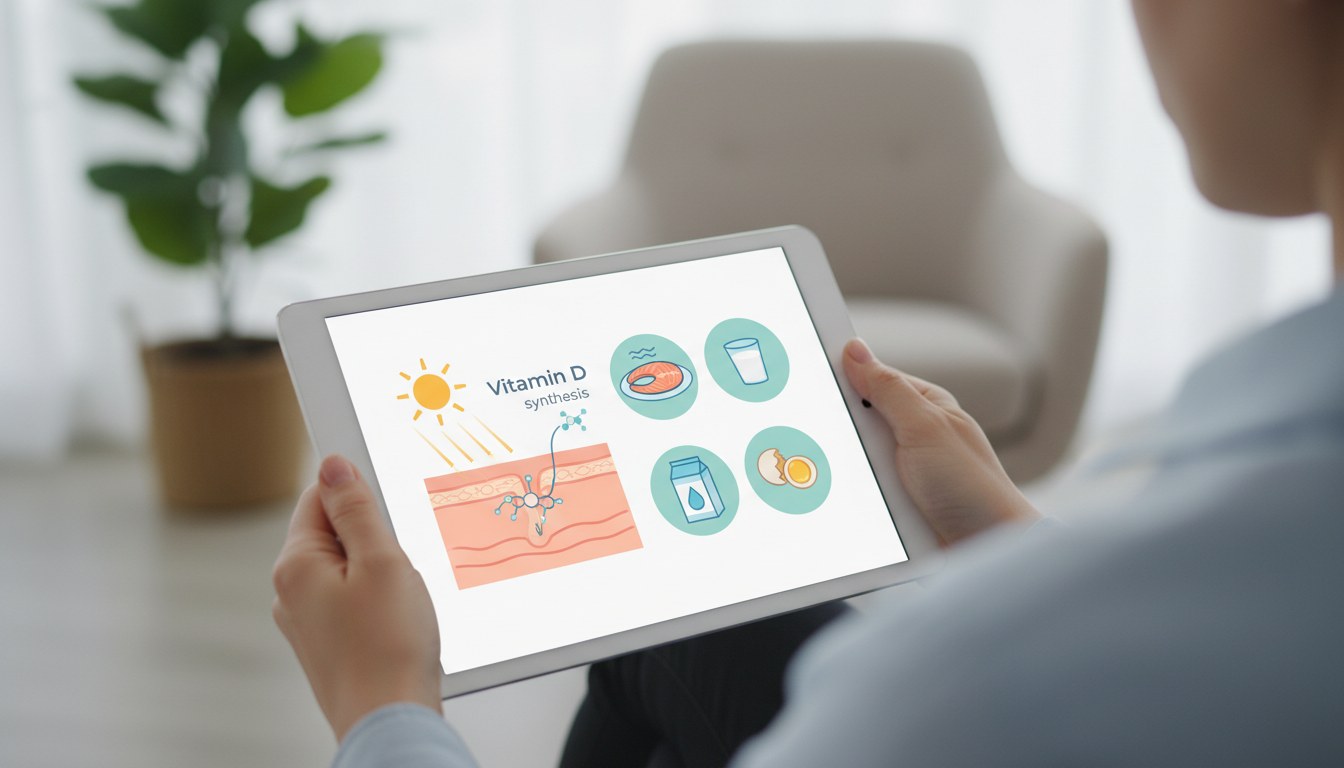
Your body makes vitamin D when sunlight hits your skin, so many of the common reasons for a lower level relate to sun exposure and to how well your body absorbs and processes the vitamin. Frequent contributors include:
- Limited time outdoors, working indoors, or living at a higher latitude where winter sun is weak
- Regularly covering the skin or using sunscreen, which reduces vitamin D production (this is not a reason to skip sun protection)
- Darker skin, which makes vitamin D more slowly from the same amount of sun
- Older age, since skin becomes less efficient at producing vitamin D over time
- Higher body weight, which can lower circulating levels
- Conditions that reduce fat absorption, such as celiac disease, Crohn's disease, or a history of weight-loss (bariatric) surgery
- Certain medications, including some used for seizures and long-term steroids
- Liver or kidney disease, which affects how vitamin D is activated
Why Vitamin D Matters and What Low Levels Feel Like
Vitamin D helps your gut absorb calcium and phosphorus, which keeps bones and muscles working properly. It also plays a role in immune function. Mild or borderline shortfalls often cause no symptoms at all, which is why a number like 25 ng/mL is frequently found on routine testing in someone who feels fine.
When a deficiency is more significant or long-standing, it can show up as bone pain, muscle weakness or aches, and tiredness. In children, severe deficiency can cause rickets, which softens and weakens growing bones. In adults, it can cause osteomalacia, a softening of bone. In older adults, low levels are linked to muscle weakness and a higher risk of falls. Because these signs are vague and overlap with many other conditions, a low number is a reason to talk with your doctor, not to self-diagnose.
How Vitamin D Levels Are Raised
There are three ways to raise a vitamin D level: sensible sun exposure, diet, and supplements. Food sources include fatty fish such as salmon and sardines, egg yolks, and fortified foods like milk, some plant milks, and certain cereals. As a general nutrition reference, the National Institutes of Health lists a Recommended Dietary Allowance of 600 IU (15 mcg) per day for most adults and 800 IU (20 mcg) for adults older than 70, with a tolerable upper intake level of 4,000 IU per day for adults.
Those figures are everyday nutrition targets, not a treatment plan. The dose used to correct a documented low level is individualized and depends on how low you are, why, and your other health conditions, so it should be set by your clinician rather than guessed at. Avoid high-dose or "megadose" supplements on your own: more is not better, and very high intake over time can push your calcium too high. If you start a supplement, your doctor will often recheck the level after about three months to confirm it is working.
When to Seek Medical Care
When to Seek Urgent or Emergency Care
A borderline vitamin D level like 25 ng/mL is almost never an emergency. But problems at the extremes, either far too much vitamin D or a related drop in blood calcium, can be serious. This guidance is in addition to, not a replacement for, the general disclaimer above.
Emergency, call 911 or go to the emergency room immediately if:
- You have signs of very high blood calcium after taking large amounts of vitamin D, such as confusion, extreme weakness or drowsiness, or persistent vomiting with signs of dehydration.
- You have a fast, pounding, or clearly irregular heartbeat, fainting, or a seizure.
- You have symptoms of very low calcium, such as strong muscle cramps or spasms, or numbness and tingling around the mouth, hands, or feet, together with fainting or an irregular heartbeat.
See a doctor soon (same-day or next available appointment) if:
- You have a low or borderline result you want explained, or ongoing tiredness, bone pain, or muscle weakness.
- You have had recent unexplained falls, or a condition that affects absorption such as celiac or Crohn's disease.
- Your child has bowed legs, delayed growth, or other signs that could point to rickets.
Frequently Asked Questions
Is a vitamin D level of 25 ng/mL low?
It is below the Endocrine Society's sufficiency target of 30 ng/mL but above the deficiency line, and it meets the National Institutes of Health adequacy threshold of 20 ng/mL. For many healthy adults 25 ng/mL is acceptable, but your doctor decides based on your symptoms and risk factors.
What is a dangerously low vitamin D level?
A level below 12 ng/mL (30 nmol/L) is classified as deficient. When it stays low for a long time it can affect bone health, causing osteomalacia in adults and rickets in children. Levels this low usually warrant treatment guided by a clinician.
Should I take a supplement if my vitamin D is 25 ng/mL?
Maybe. It depends on your risk factors, your bone health, and the target your doctor uses. Do not start high-dose supplements on your own, because too much vitamin D can be harmful. Ask your clinician what is right for you.
Do I need to fast for a vitamin D test?
No. The 25-hydroxyvitamin D test does not require fasting and can be drawn at any time of day.
Can vitamin D be too high?
Yes. Excess vitamin D almost always comes from high-dose supplements, not from sunlight or food. Very high levels can raise blood calcium and cause nausea, vomiting, weakness, frequent urination, and kidney problems.
How long does it take to raise a vitamin D level?
Levels rise gradually over several weeks to a few months, depending on the cause and the amount taken. Doctors often recheck the level after about three months to see whether the plan is working.
Sources
- Office of Dietary Supplements, National Institutes of Health (NIH) - Vitamin D - Health Professional Fact Sheet
- MedlinePlus (National Library of Medicine, NIH) - Vitamin D Test
- Institute of Medicine (National Academy of Medicine) - Read "Dietary Reference Intakes for Calcium and Vitamin D" at NAP.edu
- Endocrine Society - Vitamin D for the Prevention of Disease
- Mayo Clinic - Vitamin D