Iron Deficiency Anemia in Pregnancy: Causes and Treatment
Iron deficiency anemia is the most common nutritional deficiency in pregnancy worldwide, affecting approximately 50% of pregnant women in developing countries and 18-27% in the United States.
Written By: DocAi Health Editorial Team
Last Updated: 2026-07-13
Iron deficiency anemia is the most common nutritional deficiency in pregnancy worldwide, affecting approximately 50% of pregnant women in developing countries and 18-27% in the United States. Pregnancy dramatically increases the body's iron requirements, to expand maternal blood volume by 45-50%, to support placental development, and to meet the growing fetus's needs for iron (used in fetal brain development and red blood cell production). When iron intake cannot meet these increased demands, iron stores are depleted and anemia develops. Understanding this condition's risks, symptoms, and prevention is essential for a healthy pregnancy.
Why Pregnancy Increases Iron Demands
The average non-pregnant adult woman requires 18 mg of iron per day from the diet. During pregnancy, this requirement rises to 27 mg/day, with the most critical period in the second and third trimesters, when fetal growth and blood volume expansion are most rapid. Total additional iron needed across pregnancy is approximately 1,000 mg. The fetus receives iron preferentially (the placenta actively transports iron to the fetus even at the expense of maternal stores), meaning the mother's stores are depleted first.
Women who enter pregnancy with low iron stores, due to heavy menstrual bleeding, inadequate diet, prior pregnancies, or other causes, are at highest risk of developing deficiency.
Causes and Risk Factors
Inadequate Dietary Iron Intake
Iron exists in two forms in food: heme iron (found in meat, poultry, seafood, absorbed at 15-35%) and non-heme iron (found in plant foods, beans, fortified cereals, absorbed at 2-20%). Vegetarians and vegans have substantially lower dietary iron bioavailability and require significantly higher total iron intake to meet the same needs. Many women do not consume enough iron-rich foods to meet pregnancy requirements, even before the increased demands of pregnancy are factored in.
Pre-existing Iron Deficiency
Women who enter pregnancy with depleted iron stores (due to heavy menstrual periods, recent blood donation, or poor nutrition) are at high risk for iron deficiency anemia by mid-pregnancy.
Multiple or Closely Spaced Pregnancies
Each pregnancy depletes iron stores. Women who become pregnant again within 18-24 months of a previous pregnancy may have not had sufficient time to replenish stores.
Severe First Trimester Nausea/Vomiting
Hyperemesis gravidarum or severe nausea that limits food and prenatal vitamin intake significantly impairs iron consumption during a critical early period.
Poor Absorption Conditions
Inflammatory bowel disease (Crohn's disease, ulcerative colitis), celiac disease, and prior bariatric surgery all impair iron absorption. Patients with these conditions have higher iron deficiency risk and may require IV iron supplementation rather than oral.
Symptoms of Iron Deficiency Anemia in Pregnancy
Many of the symptoms of anemia overlap with normal pregnancy symptoms, making it easy to attribute them to pregnancy alone rather than recognizing anemia as a contributing or primary cause:
- Extreme fatigue and weakness, beyond typical pregnancy tiredness
- Pallor (pale skin, pale inner eyelids, pale nail beds)
- Shortness of breath on exertion or at rest
- Heart palpitations or racing heart
- Dizziness or lightheadedness
- Headaches
- Difficulty concentrating ("brain fog")
- Cold hands and feet
- Pica, unusual cravings for non-food substances (ice, dirt, starch), a recognized sign of iron deficiency
- Restless leg syndrome (iron deficiency is a known cause)
When to Seek Medical Care
Iron deficiency anemia in pregnancy is usually managed with routine prenatal care, but some symptoms need urgent evaluation rather than a scheduled visit.
🚨 Emergency, call 911 or go to the emergency room immediately if you have: shortness of breath at rest or that comes on suddenly; chest pain or pressure; fainting or near-fainting; a rapid, irregular, or racing heartbeat along with chest discomfort, breathlessness, or dizziness; severe or worsening dizziness; a sudden severe headache; or any other symptom that feels sudden, severe, or different from your usual pregnancy symptoms. In pregnancy, these can be signs of severe anemia, a heart problem (such as peripartum cardiomyopathy), a blood clot in the lungs (pulmonary embolism), or preeclampsia, not just "ordinary" iron deficiency, and need urgent evaluation. Cardiovascular conditions are a leading cause of pregnancy-related death in the US, so these symptoms should never be assumed to be routine.
See a doctor soon (non-emergency) if you have milder, gradually worsening versions of these symptoms, such as increasing fatigue, mild breathlessness with exertion only, occasional palpitations without other symptoms, or pale skin/nail beds, schedule an appointment with your obstetrician or midwife for evaluation and blood testing.
Monitor at home: Mild tiredness that improves with rest, and the expected adjustment to iron supplements (such as constipation or stomach upset), are reasonable to watch at home. Keep your scheduled prenatal appointments and blood tests, and contact your obstetrician or midwife sooner if symptoms worsen or any of the signs above appear.
Risks of Untreated Iron Deficiency Anemia in Pregnancy
Risks to the Mother
- Increased fatigue and reduced physical capacity throughout pregnancy
- Higher risk of postpartum hemorrhage and greater severity if hemorrhage occurs
- Reduced tolerance for blood loss during delivery
- Higher risk of requiring blood transfusion
- Higher risk of postpartum depression (iron plays a role in dopamine and serotonin synthesis)
Risks to the Baby
- Preterm birth (particularly with severe anemia)
- Low birth weight
- Impaired infant iron stores at birth (the fetus draws on maternal stores, but severe maternal deficiency limits what the fetus can accumulate)
- Potential impact on fetal brain development (iron is critical for myelination and neurotransmitter synthesis)
The risks are most significant with moderate to severe anemia, mild iron deficiency with early detection and supplementation is very manageable and typically does not lead to these outcomes when treated appropriately.
Diagnosis: What the Tests Mean
Anemia in pregnancy is diagnosed with CBC (complete blood count): hemoglobin below 11 g/dL in the first trimester, below 10.5 g/dL in the second, and below 11 g/dL in the third trimester indicates anemia (slightly different from non-pregnancy thresholds due to physiological hemodilution of pregnancy). Ferritin (iron storage protein) is the most sensitive test for iron deficiency, a level below 30 ng/mL in pregnancy suggests iron depletion even before anemia develops.
Treatment: Iron Supplementation
Prenatal Vitamins and Routine Iron Supplementation
Most prenatal vitamins contain 27-30 mg of elemental iron, sufficient to prevent iron deficiency in women who start pregnancy with adequate stores. For women with confirmed deficiency or anemia, therapeutic doses of 100-200 mg of elemental iron per day are typically prescribed.
Types of Oral Iron Supplements
Common forms: ferrous sulfate (most affordable, 65 mg elemental iron per 325 mg tablet, standard therapeutic option), ferrous gluconate (lower elemental iron, gentler on GI), ferrous bisglycinate (better absorbed, fewer GI side effects). The primary side effect of iron supplements is GI: constipation, nausea, dark stools, cramping. Taking supplements with vitamin C (orange juice or a vitamin C supplement) enhances absorption. Avoid taking with coffee, tea, calcium supplements, or dairy within 2 hours.
Intravenous (IV) Iron
IV iron is increasingly used in pregnancy for: severe anemia requiring rapid correction; oral iron intolerance; malabsorption conditions; or third trimester anemia where rapid response is needed before delivery. Modern IV iron preparations (ferric carboxymaltose, iron sucrose) have good safety profiles in pregnancy and can replenish iron stores within one to three infusions.
Iron-Rich Foods to Prioritize
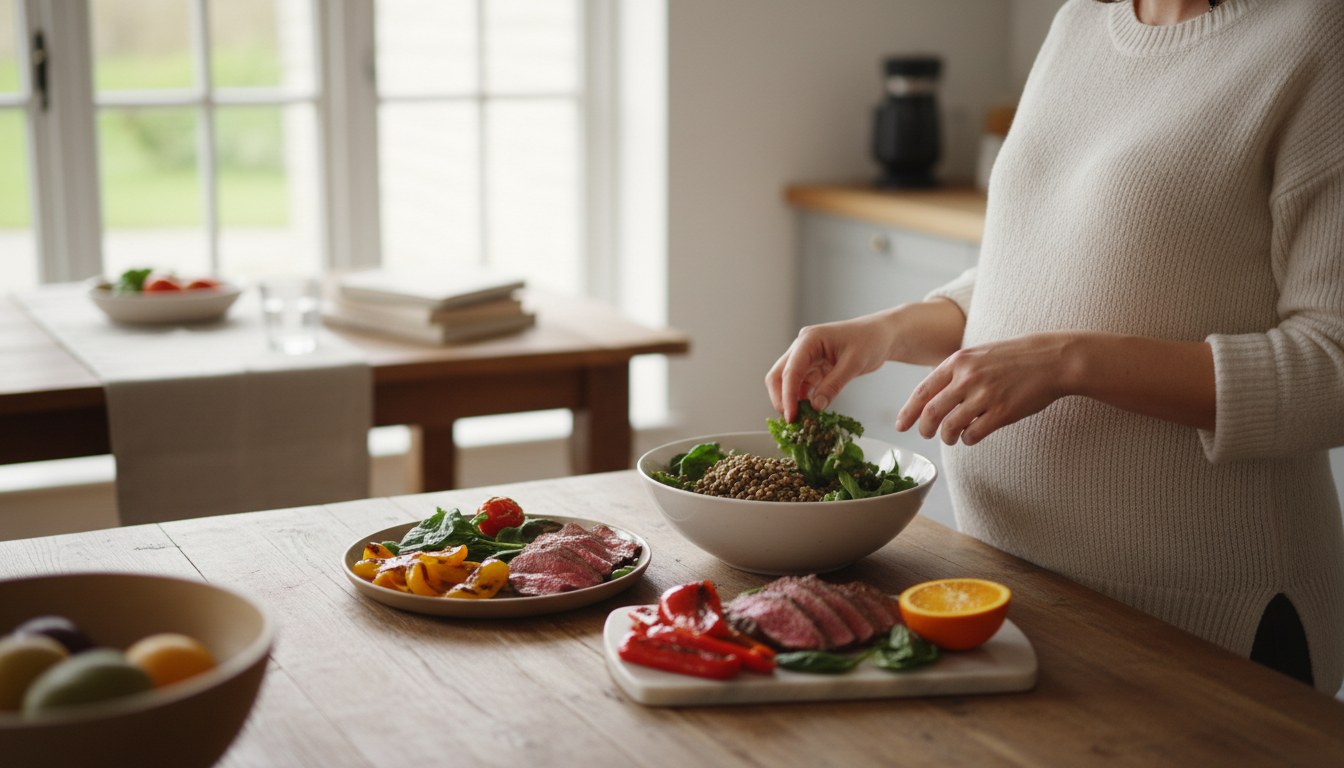
Heme iron sources (better absorbed): Lean red meat, poultry (especially dark meat), fish, shellfish (oysters, clams). Non-heme iron sources: Lentils, chickpeas, beans, tofu, quinoa, dark leafy greens (spinach, Swiss chard), fortified cereals, pumpkin seeds, dried fruits (apricots, raisins). Combine plant iron sources with vitamin C-rich foods (bell peppers, citrus, tomatoes) to enhance absorption by 3-fold.
Frequently Asked Questions
How do I know if my fatigue in pregnancy is from anemia or just normal pregnancy tiredness?
The two are difficult to distinguish without a blood test, which is why routine iron screening (CBC and often ferritin) is performed at the first prenatal visit and repeated in the second or third trimester. Anemia-related fatigue is often more severe, exhausted rather than merely tired, with breathlessness and palpitations on mild exertion. If you feel your fatigue is extreme or worsening, ask your provider to check your hemoglobin and ferritin.
Can I get enough iron from diet alone without supplements?
Meeting the 27 mg/day pregnancy requirement through diet alone is challenging but possible for some women who eat abundant heme iron sources. For most pregnant women, particularly vegetarians, vegans, those with heavy menstrual history, or those starting with low stores, supplementation is essential. Prenatal vitamins provide the baseline; additional supplementation is needed if deficiency develops.
Iron supplements cause constipation, what can I do?
Iron-related constipation is common. Strategies: increase dietary fiber and fluid intake; add a stool softener (docusate is safe in pregnancy); switch to a gentler form of iron (ferrous bisglycinate causes fewer GI symptoms); take iron every other day (some evidence suggests equivalent absorption with fewer GI side effects with alternate-day dosing).
Is it possible to take too much iron during pregnancy?
Yes, excessive iron supplementation (significantly above therapeutic doses) can cause iron overload, GI toxicity, and potentially harm the developing fetus. Do not take more iron than recommended by your provider. Routine prenatal vitamins with 27-30 mg are appropriate for prevention; therapeutic doses above 100 mg should be based on a documented deficiency or anemia. If you or someone else (including a child who accidentally swallows iron tablets) may have taken a large or unknown amount of iron, call Poison Control at 1-800-222-1222 (US) or go to the ER, accidental iron overdose can be serious, especially in young children.
When will my iron levels return to normal after pregnancy?
Iron stores typically take 3-6 months postpartum to normalize, and longer with breastfeeding (which continues to draw on iron stores) or heavy postpartum bleeding. Women with anemia after delivery may need to continue iron supplementation for 3-6 months postpartum. Repeat CBC or ferritin testing at the 6-week postpartum visit is recommended for those with anemia during pregnancy.
Sources
- American College of Obstetricians and Gynecologists (ACOG) - Anemia in Pregnancy
- CDC - Recommendations to Prevent and Control Iron Deficiency in the United States
- World Health Organization (WHO) - Archived: Iron deficiency anaemia: assessment, prevention and control
- National Institutes of Health (NIH) Office of Dietary Supplements - Iron - Health Professional Fact Sheet
- Mayo Clinic - Iron deficiency anemia - Symptoms & causes