Foods to Avoid During Pregnancy: A Practical Guide
During pregnancy, the foods to avoid are mostly ones that carry a higher risk of foodborne illness or that affect the pregnancy directly: raw or undercooked meat and eggs, high-mercury fish, unpasteurized dairy, certain deli meats, raw sprouts, alcohol, and excess caffeine.
Written By: DocAi Health Editorial Team
Last Updated: 2026-07-25
During pregnancy, the foods to avoid are mostly ones that carry a higher risk of foodborne illness or that affect the pregnancy directly: raw or undercooked meat and eggs, high-mercury fish, unpasteurized dairy, certain deli meats, raw sprouts, alcohol, and excess caffeine. Cooking food thoroughly, choosing pasteurized products, and checking labels lowers most of these risks.
Raw or Undercooked Meat, Poultry, and Eggs
Why it matters: Undercooked meat, poultry, and eggs can carry bacteria such as Salmonella, Listeria, or the parasite that causes toxoplasmosis, all of which pose a higher risk during pregnancy.
What to avoid: Rare or medium-rare meat, undercooked poultry, raw or runny eggs (including in homemade dressing, raw cookie dough, or unpasteurized eggnog), and refrigerated pate or meat spreads.
Safer choices: Cook meat and poultry until it shows no pink in the center, and cook eggs until both the yolk and white are firm. Pasteurized egg products are a safe substitute in recipes that call for raw egg.
Fish and Seafood
Why it matters: Some fish contain enough mercury to affect a developing nervous system if eaten regularly. Raw seafood also carries a higher risk of bacteria or parasites.
What to avoid: Shark, swordfish, king mackerel, and tilefish are high in mercury and best avoided entirely. Raw fish and shellfish, including sushi made with raw fish, refrigerated smoked seafood, and raw oysters, fall into the same higher-risk group.
Safer choices: Lower-mercury options such as salmon, shrimp, canned light tuna, and cod are fine in normal servings. Fully cooked sushi rolls and cooked shellfish are safer alternatives to raw seafood.
Unpasteurized Dairy and Soft Cheeses
Why it matters: Unpasteurized (raw) milk and cheeses made from it can carry Listeria, a bacteria that is more dangerous during pregnancy than at other times.
What to avoid: Raw milk, and soft cheeses such as brie, camembert, feta, blue cheese, and queso fresco, unless the label states they are made from pasteurized milk.
Safer choices: Hard cheeses such as cheddar, Swiss, and parmesan, and any soft cheese labeled pasteurized, are considered safe. When in doubt, check the label or ask before eating cheese from a deli counter or an unlabeled source.
Deli Meats, Hot Dogs, and Refrigerated Smoked Foods
Why it matters: These ready-to-eat foods can become contaminated with Listeria during processing or storage, even when they look and smell normal.
What to avoid: Cold deli meat, hot dogs, and refrigerated smoked fish or pate eaten straight from the package.
Safer choices: Heat deli meat and hot dogs until steaming hot before eating, which kills Listeria. Canned or shelf-stable versions of pate and smoked fish do not carry the same risk.
Raw Sprouts and Unwashed Produce
Why it matters: Raw sprouts, including alfalfa, clover, radish, and mung bean sprouts, can harbor bacteria inside the seed itself, so washing does not fully remove the risk. Unwashed produce can carry soil-borne bacteria.
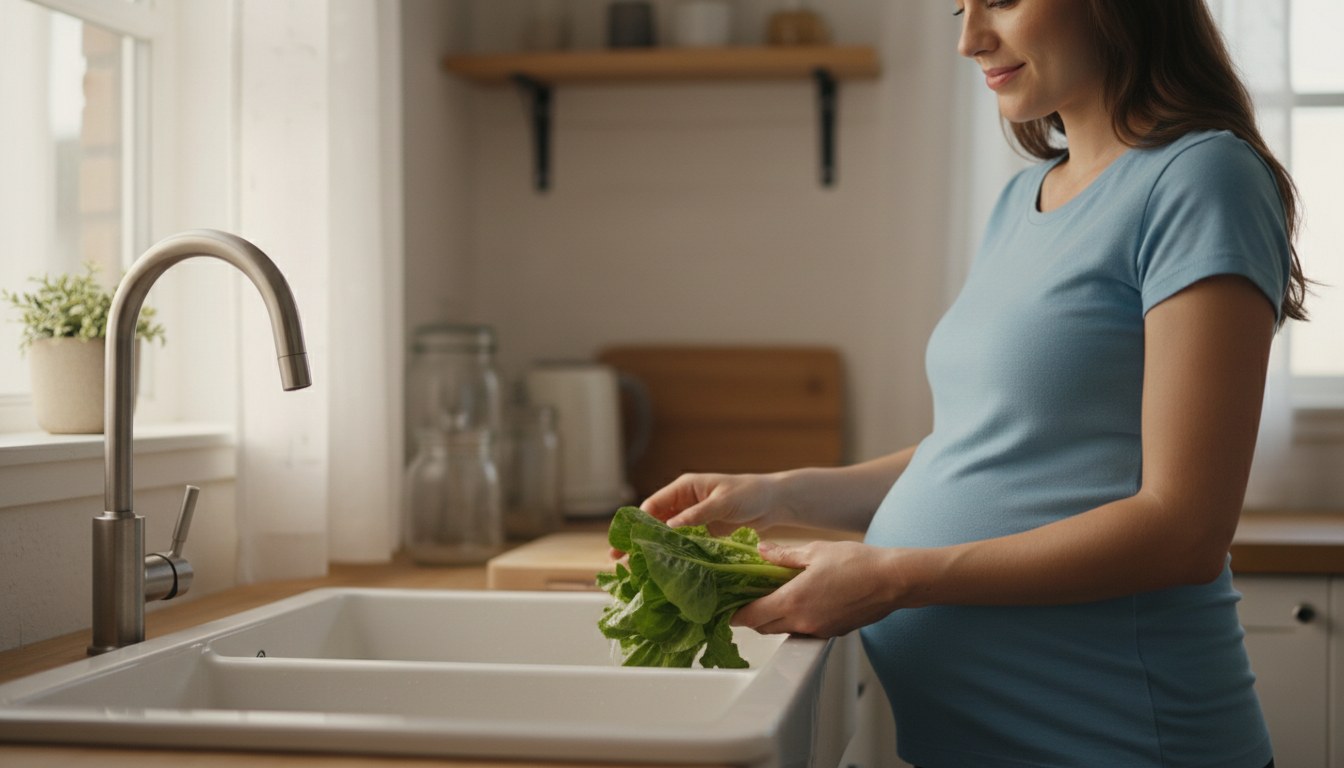
What to avoid: Raw sprouts of any kind, and unwashed fruits and vegetables, especially melons and leafy greens.
Safer choices: Cooked sprouts, and produce that has been washed well under running water. Pre-cut melon should be refrigerated and eaten promptly.
Alcohol
Why it matters: No amount of alcohol has been shown to be safe during pregnancy. Alcohol crosses the placenta and can affect fetal development at any stage.
What to avoid: Beer, wine, liquor, and foods or desserts made with a notable amount of added alcohol that has not been fully cooked off.
Safer choices: Nonalcoholic beer, nonalcoholic wine, and mocktails are reasonable substitutes. If you drank before you knew you were pregnant, talk with your prenatal care provider rather than assuming the worst. Most one-time exposures do not lead to harm, and your provider can guide next steps for your specific situation.
Caffeine
Why it matters: High caffeine intake has been linked to a higher risk of pregnancy complications, though moderate intake is generally considered acceptable.
What to limit: Coffee, tea, energy drinks, and caffeinated soda. Many prenatal guidelines suggest keeping total caffeine to a moderate daily amount, roughly what is in one cup of coffee.
Safer choices: Decaf coffee and tea, herbal teas known to be pregnancy-safe, and water or milk in place of energy drinks.
Herbal Teas, Supplements, and Unpasteurized Juice
Why it matters: Not all herbal products have been studied for safety in pregnancy, and unpasteurized juice or cider can carry the same bacteria risks as raw milk.
What to avoid: Unpasteurized (raw) juice or cider, herbal supplements you have not cleared with your prenatal care provider, and herbal teas outside the small list generally considered safe in normal amounts.
Safer choices: Pasteurized juice, and ginger or peppermint tea in moderate amounts, are commonly used, but ask your provider before starting any new herbal product or supplement.
When to Seek Medical Care
When to Seek Urgent or Emergency Care
Most exposures to foods on this list do not cause a problem, but a few situations after eating a risky food need prompt attention. This guidance is in addition to, not a replacement for, the general disclaimer above.
Emergency, call 911 or go to the emergency room immediately if:
- You have signs of a severe allergic reaction, such as swelling of the lips, tongue, or throat, difficulty breathing, hives spreading rapidly, or fainting.
- You develop a fever of 100.4 F (38 C) or higher with chills, muscle aches, and stomach upset after eating a food linked to Listeria risk, such as soft cheese, deli meat, or unpasteurized dairy. Listeria infection in pregnancy can become serious and needs prompt evaluation.
- You cannot keep any fluids down and have signs of severe dehydration, such as dizziness, a racing heartbeat, or very little urination.
- You notice a clear decrease or absence of fetal movement in the second half of pregnancy.
See a doctor soon (same-day or next available appointment) if:
- Vomiting or diarrhea lasts more than 24 hours or keeps you from keeping food or fluids down.
- You have a mild fever under 100.4 F with stomach upset after eating a raw or unpasteurized food.
- You have ongoing nausea that feels different from your usual pregnancy symptoms.
- You are worried after realizing you ate something on the avoid list, even without symptoms.
Frequently Asked Questions
Is it safe to eat sushi during pregnancy?
Cooked sushi rolls are generally fine. Sushi made with raw fish carries a higher risk of bacteria or parasites, so many providers suggest sticking to fully cooked options during pregnancy.
Can I drink coffee while pregnant?
Moderate caffeine intake, roughly the amount in one cup of coffee a day, is generally considered acceptable. Check with your provider if you are unsure what counts as moderate for you.
What cheeses are safe to eat during pregnancy?
Hard cheeses and any cheese labeled pasteurized are considered safe. Soft cheeses made from unpasteurized milk, such as some brie, feta, and blue cheese, are best avoided unless the label confirms pasteurization.
Is deli meat safe if I heat it until steaming?
Yes. Heating deli meat and hot dogs until steaming hot kills the bacteria that can grow in these products during storage, which is why this step is recommended rather than avoiding them completely.
What should I do if I already ate something on the avoid list?
Most one-time exposures do not cause a problem. Watch for fever, chills, or flu-like symptoms in the days and weeks after, and call your provider if you have concerns or develop symptoms.
Can I eat eggs during pregnancy?
Yes, as long as they are fully cooked so the yolk and white are firm. Avoid raw or runny eggs in foods like homemade dressing, raw batter, or unpasteurized eggnog.
Which fish should I avoid, and which are safe to eat?
Avoid shark, swordfish, king mackerel, and tilefish because of high mercury levels. Lower-mercury choices such as salmon, shrimp, and canned light tuna are safe in normal servings.
Related articles
How much iron do you need during pregnancy?Which Medications Are Safe During Pregnancy?Morning sickness that won't let up: what actually helpsSources
- MedlinePlus (National Library of Medicine, NIH) - Pregnancy and Nutrition
- Centers for Disease Control and Prevention (CDC) - Safer Food Choices for Pregnant Women
- U.S. Food and Drug Administration (FDA) - Advice about Eating Fish
- American College of Obstetricians and Gynecologists (ACOG) - Healthy Eating During Pregnancy
- Mayo Clinic - Pregnancy nutrition: Foods to avoid during pregnancy