COPD: Causes, Symptoms, and Management
Chronic obstructive pulmonary disease, or COPD, is a group of lung conditions, mainly emphysema and chronic bronchitis, that make it progressively harder to move air out of your lungs.
Medical ConditionsCOPDmanagement
Written By: DocAi Health Editorial Team
Last Updated: 2026-08-24
Medically Reviewed By: DocAi Health Medical Review Team
Last Updated: 2026-08-24
Medically Reviewed By: DocAi Health Medical Review Team
Medical Disclaimer: This article is for general informational and educational purposes only and is not medical advice. It does not create a doctor-patient relationship and is not a substitute for professional diagnosis or treatment by a qualified healthcare provider. Never disregard or delay seeking professional medical advice because of something you have read here. If you think you may have a medical emergency, call 911 or your local emergency number right away. Health information can change and this guidance is general and US-focused, so consult a licensed clinician in your own country about your specific situation.
Chronic obstructive pulmonary disease, or COPD, is a group of lung conditions, mainly emphysema and chronic bronchitis, that make it progressively harder to move air out of your lungs. It is most often caused by long-term exposure to cigarette smoke, though air pollution, workplace dust and fumes, and a rare genetic condition can also cause it. COPD develops slowly over years, usually showing up as a persistent cough, mucus, and breathlessness during activities that used to feel easy. It cannot be reversed, but treatment, quitting smoking, and pulmonary rehabilitation can slow its progress and ease symptoms. This article covers what causes COPD, how it is diagnosed, and the treatments that help you manage it.
What Happens to Your Lungs in COPD
Healthy lungs have thousands of small, stretchy air sacs called alveoli that expand with each breath and spring back to push air out. COPD damages this system in two overlapping ways. In emphysema, the walls between air sacs break down, so instead of many small sacs you end up with fewer, larger ones with less surface area for oxygen to pass into your blood. Those damaged sacs also lose their elastic recoil, so air gets trapped and stale air lingers in your lungs at the end of each breath. In chronic bronchitis, the airways themselves become inflamed and narrowed, and the lining produces extra mucus, which blocks airflow and triggers the ongoing cough. Most people with COPD have a mix of both processes rather than a pure case of one.
Because the damage builds slowly, many people do not notice symptoms until 50 percent or more of their lung function is already affected. Early breathlessness often gets written off as being out of shape or a normal part of aging, which is one reason COPD is frequently diagnosed later than it could be.
What Causes COPD
Cigarette smoking is the leading cause of COPD in the United States, responsible for most cases according to the CDC. The longer and heavier the smoking history, measured in pack-years, the higher the risk, though not every smoker develops COPD and some people who never smoked still do. Other causes and contributors include:
- Secondhand smoke exposure over years, at home or at work
- Occupational exposure to dust, chemical fumes, or vapors, common in mining, construction, and manufacturing
- Indoor and outdoor air pollution, including smoke from burning biomass fuel for cooking or heating in poorly ventilated spaces
- Alpha-1 antitrypsin deficiency, a genetic condition that leaves the lungs unprotected against ongoing inflammation and can cause COPD even in people who never smoked, often at a younger age
- A history of frequent childhood respiratory infections, which can limit how fully the lungs develop
Asthma that is not well controlled over many years can also lead to fixed airway narrowing that overlaps with COPD, a pattern doctors sometimes call asthma-COPD overlap.
Recognizing the Symptoms
COPD symptoms usually build gradually, which is part of what makes the disease easy to underestimate early on. Common signs include:
- A cough that lasts for months, often with clear, white, yellow, or greenish mucus, sometimes called a smoker's cough
- Shortness of breath that starts during exertion, such as climbing stairs or carrying groceries, and gradually appears with less and less activity
- Wheezing or a tight, whistling sound when you breathe
- Chest tightness
- Frequent respiratory infections
- Low energy and unintentional weight loss in more advanced disease
- Swelling in the ankles, feet, or legs, which can signal that the heart is working harder against lung damage
Symptoms are not steady. Most people with COPD have periods of relative stability interrupted by exacerbations, flare-ups where cough, mucus, and breathlessness suddenly get worse, often triggered by a respiratory infection, cold weather, or air pollution. Exacerbations matter because each one can cause a further step down in lung function and raises the risk of hospitalization.
A small number of exacerbations turn severe enough to become an emergency. When oxygen levels fall too low, the lips, fingertips, or nail beds can take on a blue or gray tinge, a sign doctors call cyanosis. Very low oxygen or a buildup of carbon dioxide in the blood can also cause confusion, drowsiness, or trouble staying awake, which is a sign the body is losing its ability to keep up on its own. Because COPD strains the heart over time, some people also develop chest pain, a pounding or irregular heartbeat, or worsening leg and ankle swelling during a bad flare-up, and coughing up a significant amount of blood, rather than a streak in the mucus, is never something to wait out. These are the signs that separate a flare-up you can manage at home with your action plan from one that needs an emergency room.
How COPD Is Diagnosed
If your history and symptoms point to COPD, your doctor will typically start with spirometry, a simple breathing test where you blow forcefully into a tube connected to a machine that measures how much air you can exhale and how fast. Spirometry results after using a bronchodilator confirm COPD and help place its severity into one of four stages, from mild to very severe, based mainly on how much air you can force out in one second compared to what is expected for your age, sex, and height. Your doctor may also order a chest X-ray or CT scan to look for emphysema and rule out other causes of your symptoms, blood tests to check oxygen levels or screen for alpha-1 antitrypsin deficiency, and pulse oximetry to measure blood oxygen. Because COPD symptoms overlap with asthma, heart failure, and other conditions, getting an accurate diagnosis from these tests matters more than guessing from symptoms alone.
Treatment and Management
There is no cure for COPD, but a combination of treatments can ease symptoms, reduce exacerbations, and help you stay active. Management is typically layered based on how severe your symptoms and airflow limitation are.
Quitting smoking
Stopping smoking is the single most effective step in COPD care. It is the one intervention proven to slow the rate of lung function decline, at any stage of the disease. Nicotine replacement, prescription medications, and counseling programs all improve the odds of quitting for good, and combining approaches works better than willpower alone.
Inhaled medications
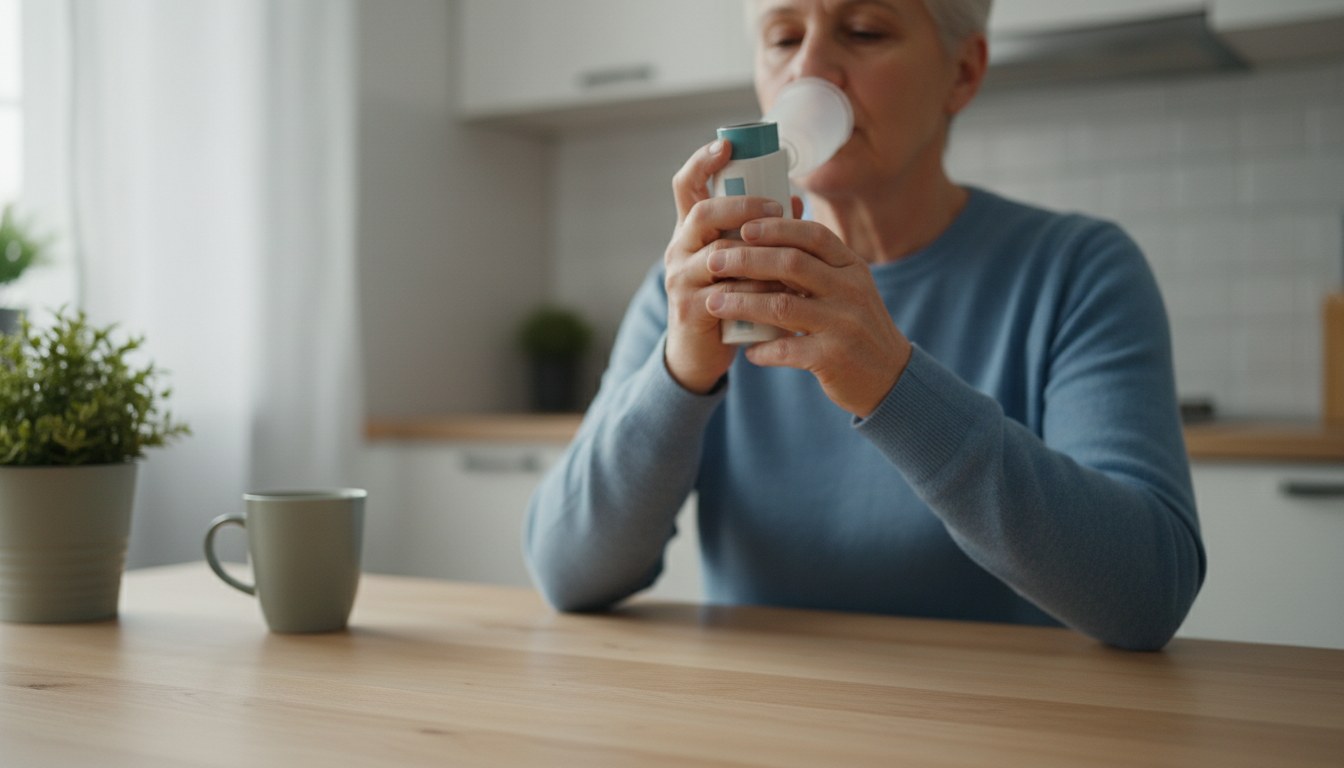
Bronchodilators relax the muscles around the airways to make breathing easier and come in short-acting forms for quick relief and long-acting forms taken daily for ongoing control. Inhaled corticosteroids are sometimes added for people with frequent exacerbations or an asthma-overlap pattern, usually combined with a long-acting bronchodilator rather than used alone. Getting inhaler technique right, including using a spacer when appropriate, makes a real difference in how much medication actually reaches your lungs.
Pulmonary rehabilitation
This is a supervised program combining exercise training, breathing techniques, nutrition guidance, and education about your condition. It is consistently associated with less breathlessness, better exercise capacity, and improved quality of life, and is recommended for most people with moderate to severe symptoms.
Oxygen therapy
For people whose blood oxygen levels drop too low, supplemental oxygen used for at least 15 hours a day can improve survival and reduce strain on the heart. Your doctor determines the need for oxygen using a blood oxygen test, not by symptoms alone.
Vaccinations and infection prevention
Annual flu vaccination, staying current on pneumococcal and COVID-19 vaccines, and prompt treatment of respiratory infections all lower the risk of an exacerbation. Because infections are a common trigger for flare-ups, prevention is part of everyday COPD management, not an afterthought.
Surgery
For a small group of people with severe emphysema concentrated in certain areas of the lung, procedures such as lung volume reduction surgery or, in select cases, lung transplant may be considered after other treatments have been tried.
Living With COPD Day to Day
Alongside medical treatment, everyday habits shape how well you feel. Pacing activities, using energy-saving techniques for chores, and practicing pursed-lip and diaphragmatic breathing can reduce the sense of breathlessness during exertion. Staying physically active within your limits, guided by pulmonary rehabilitation or your care team, helps preserve muscle strength and stamina rather than letting deconditioning add to the breathlessness. Eating enough protein and calories matters too, since breathing itself burns more energy when the lungs are working harder, and unintentional weight loss is common in advanced disease. Many people also benefit from an action plan, agreed with their doctor in advance, that spells out exactly what to do and which medications to start at the first sign of an exacerbation, since catching a flare-up early often keeps it from becoming a hospitalization.
Living With COPD Alongside Other Conditions
COPD rarely travels alone. Heart disease, osteoporosis, depression and anxiety, and muscle wasting are all more common in people with COPD, partly because chronic inflammation and reduced activity affect the whole body beyond the lungs. Telling your care team about mood changes, chest symptoms unrelated to breathing, or bone health is worth doing at every visit, since these conditions are treatable and managing them well tends to improve how you function day to day.
When to Seek Medical Care
When to Seek Urgent or Emergency Care
Most COPD flare-ups can be managed with your action plan and a call to your doctor, but a severe exacerbation can drop your blood oxygen or exhaust your breathing muscles quickly, and that can become life-threatening. This guidance is in addition to, not a replacement for, the general disclaimer above.
Emergency, call 911 or go to the emergency room immediately if:
- You are severely short of breath even at rest, or so breathless you cannot speak in full sentences
- Your lips, fingertips, or nail beds look blue or gray, a sign your blood oxygen has dropped dangerously low
- You feel confused, unusually drowsy, or have trouble staying awake
- You have chest pain, pressure, or tightness, especially with sweating, nausea, or pain spreading to your arm or jaw, which can signal a heart problem
- Your heart is racing, pounding, or irregular along with your breathing trouble
- You have coughed up a significant amount of blood, more than a streak in your mucus
- Your rescue inhaler is not relieving your breathlessness at all, or you need it far more often than usual just to get through the next hour
- Your oxygen saturation reading, if you check it at home, has dropped below the level your doctor told you to treat as an emergency
See a doctor soon (same-day or next available appointment) if:
- Your cough, mucus, or breathlessness is clearly worse than your usual baseline, even if you can still function
- Your mucus has changed color to yellow or green, or increased noticeably in amount
- You have a new or worsening fever along with respiratory symptoms
- You are needing your rescue inhaler more often than your normal pattern
- You have new swelling in your ankles or legs, or you are gaining weight quickly over a few days
- You are sleeping poorly because of breathlessness or waking up gasping for air
- You have lost your appetite or noticed unintentional weight loss
Frequently Asked Questions
Can COPD be reversed or cured?
No, the airway and lung damage from COPD is permanent and cannot be reversed. Treatment focuses on slowing further decline, easing symptoms, and preventing flare-ups. Quitting smoking is the step most likely to change the course of the disease, and many people manage symptoms well for years with the right treatment plan.
What is the difference between COPD and asthma?
Asthma usually starts in childhood, and airway narrowing is often fully reversible with treatment. COPD develops in adulthood, most often from smoking, and the airflow limitation is largely permanent even with bronchodilators. Some people have features of both conditions, sometimes called asthma-COPD overlap, and need a treatment plan that addresses each.
Can you get COPD without ever smoking?
Yes. Long-term exposure to secondhand smoke, workplace dust and chemical fumes, indoor air pollution from burning solid fuels, and the genetic condition alpha-1 antitrypsin deficiency can all cause COPD in people who never smoked. A history of severe childhood respiratory infections can also raise the risk.
How is COPD staged?
Doctors use spirometry results to place COPD into one of four stages, from mild to very severe, based mainly on how much air you can forcefully exhale in one second compared to what is expected for your age, sex, and height. Symptom frequency and exacerbation history also factor into your overall treatment plan.
What does a COPD exacerbation feel like?
An exacerbation feels like your usual cough, mucus, and breathlessness suddenly getting noticeably worse, often along with thicker or discolored mucus and sometimes a fever. Mild flare-ups can often be managed at home with your action plan, while severe ones with extreme breathlessness or confusion need emergency care.
Does oxygen therapy mean my COPD is very advanced?
Needing supplemental oxygen means your blood oxygen level has dropped low enough that your body benefits from extra support, which is more common in moderate to severe COPD. It is a treatment that protects your heart and organs, not a sign that nothing more can be done, and many people use it for years while staying active.
Can exercise make COPD worse?
Properly guided exercise, such as through pulmonary rehabilitation, does not damage the lungs and generally improves breathlessness, stamina, and quality of life over time. Pushing through severe chest pain or extreme breathlessness is different from steady, supervised activity, so ask your care team how to pace exertion safely for your stage of disease.
How much does quitting smoking really help once COPD has already developed?
Quitting at any stage slows the rate of further lung function decline more than any medication available and lowers the risk of exacerbations and infections. Even people diagnosed with moderate or severe COPD who quit typically see fewer symptoms and better response to treatment than those who continue smoking.
Related articles
Type 2 Diabetes: Causes, Symptoms, and ManagementOsteoarthritis: Causes, Symptoms, and ManagementIrritable Bowel Syndrome (IBS): Causes, Symptoms, and ManagementSources
- CDC - Basics About COPD
- MedlinePlus (NIH) - COPD
- Mayo Clinic - COPD - Symptoms and causes
- NHLBI (NIH) - COPD
- NHLBI (NIH) - COPD Treatment