What Is Normal Teething, and Which Symptoms Get Wrongly Blamed on It?
Normal teething usually means drooling, fussiness, chewing on objects, and tender, slightly swollen gums while the first teeth come in, often starting around the middle of the first year.
Written By: DocAi Health Editorial Team
Last Updated: 2026-09-21
Normal teething usually means drooling, fussiness, chewing on objects, and tender, slightly swollen gums while the first teeth come in, often starting around the middle of the first year. A high fever, vomiting, significant diarrhea, a widespread rash, or a baby who is hard to wake or struggling to breathe is more likely to be an illness than teething. This article explains what teething commonly looks like, which symptoms get wrongly blamed on it, and when to get care.
What normal teething looks like
Teething is the process of the first (primary) teeth moving through the gums. For many babies the first tooth appears around the middle of the first year, though timing varies a good deal from one healthy child to the next. Child dental health resources such as MedlinePlus Child Dental Health describe the general course of baby teeth and how to care for them.
Symptoms that parents commonly report, and that are often considered part of normal teething, include:
- More drooling than usual, sometimes with a mild chin or cheek rash from constant wetness
- Chewing or gnawing on fingers, toys, or the crib rail
- Tender, red, or slightly swollen gums, sometimes with a visible bump where the tooth is coming
- Fussiness or irritability, often worse at night
- Rubbing the cheek or ear on one side
- Slightly less interest in feeding on some days
These symptoms tend to come and go over several days around the time a tooth breaks through. They should not make a baby seem seriously ill.
Why teething gets blamed for so much
Babies get their first teeth at the same age that they lose some of the antibodies they received before birth and start meeting many germs for the first time, often in group settings, from siblings, or by mouthing everything they pick up. Colds, ear infections, stomach bugs and viral rashes are common at this age. Because a tooth is almost always coming in somewhere during the first two or three years, it is easy to link the two. Overlap in timing does not show that teething caused the illness.
A paper in PubMed Central titled Teething complications, a persisting misconception discusses how teething has long been blamed for problems that have other causes, and a questionnaire study of paediatric dentists found that clinicians themselves hold varying views about which signs belong to teething. The science here is not fully settled, which is a good reason to be cautious about attributing a worrying symptom to a tooth.
Symptoms that are often wrongly blamed on teething
Fever
Teething may be associated with a slight rise in temperature in some babies, but a true fever is more likely to come from an infection. If your baby has a fever, do not assume it is a tooth. Our article on fever in children covers how to approach it. A baby under 3 months with a rectal temperature of 100.4°F (38.0°C) or higher needs to be evaluated right now: call your pediatrician immediately or go to the emergency room, and do not wait or give fever medicine first. A baby of any age with fever plus unusual sleepiness that makes the baby hard to wake, or with trouble breathing, needs emergency care (911 or the ER). Fever with poor feeding needs same-day contact with a clinician.
Vomiting and diarrhea
Swallowed drool may loosen stools slightly in some babies, but repeated vomiting or frequent watery diarrhea is more suggestive of a gastrointestinal infection or another illness. The main risk is dehydration, which can progress quickly in infants. Signs include few wet diapers, no tears when crying, a dry mouth, a sunken soft spot on the head, and unusual drowsiness.
Cough, congestion and ear pulling
Cold symptoms and ear infections can both cause fussiness and ear tugging. A baby who is also feverish, sleeping poorly, or has drainage from the ear should be seen by a clinician. Ear pulling alone can happen with teething, but it can also be a sign of an ear infection, and clinicians combine history, examination and testing to tell them apart.
Widespread rash
A mild rash around the mouth and chin from drool is common. A rash on the trunk, arms, or legs, blisters in the mouth or on the hands and feet, or a rash that does not fade when pressed is not explained by teething and should be evaluated. A rash with fever and a very ill-looking baby needs emergency care.
Severe or prolonged crying and poor sleep
Teething can make babies fussier for a few days at a time. Crying that lasts for hours, especially in the evening, has several possible contributors; our article on colic explains one common pattern. Sleep disruption also has many causes, including normal developmental changes (see our article on sleep needs by age). Inconsolable crying with a high-pitched cry, a swollen belly, or repeated vomiting needs prompt medical attention.
Refusing all feeds
A baby may nurse or take a bottle less comfortably when the gums are sore. Refusing to feed altogether, or taking much less than usual for a full day, is not typical teething and may suggest mouth sores, infection, or another problem. Mouth conditions such as those listed on MedlinePlus Mouth Disorders can cause pain with feeding and can look different from a tooth coming through.
Relieving teething discomfort safely
Comfort measures that are generally considered low risk include:
- Rubbing the gums gently with a clean finger
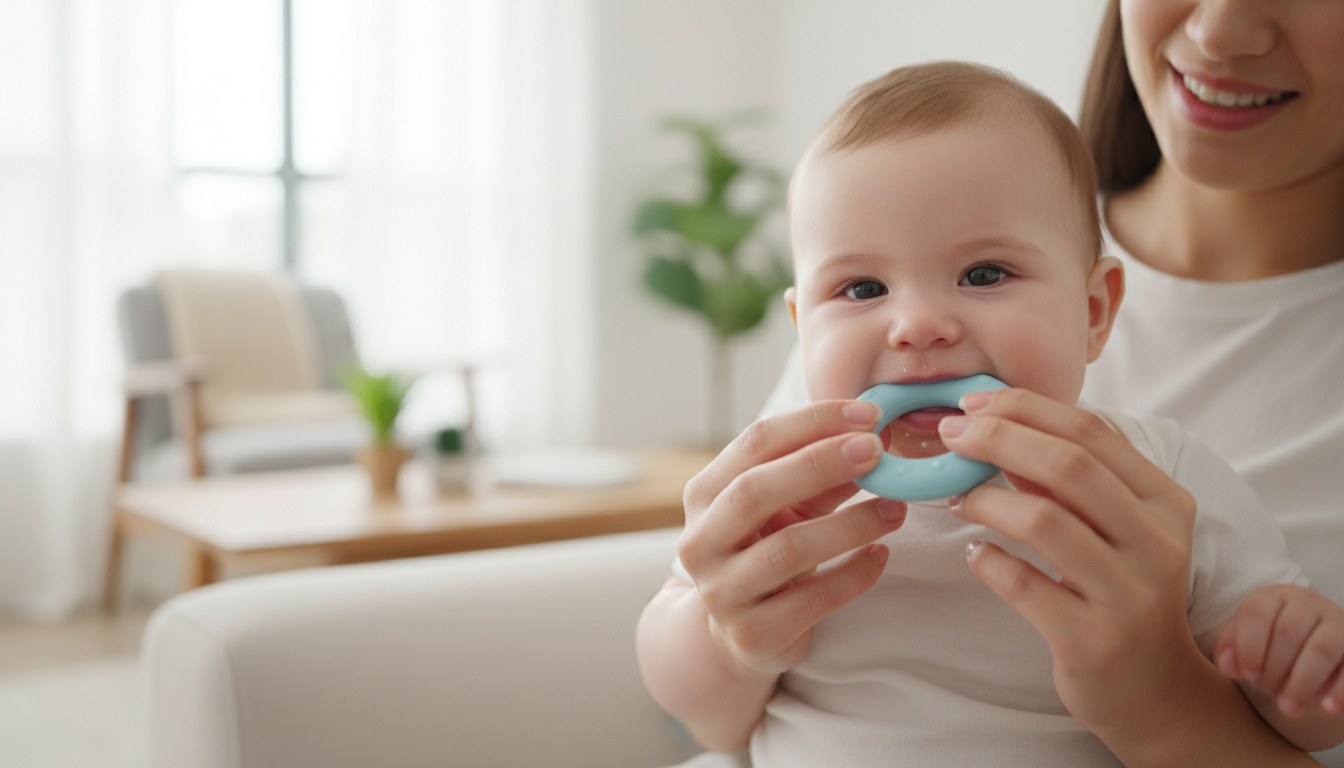
- Offering a firm, solid rubber or silicone teething ring that has been chilled in the refrigerator, not the freezer
- Offering a clean, cool, damp washcloth to chew on
- Wiping drool from the chin and applying a thin layer of plain moisturizer to protect the skin if a rash appears
Products to avoid or discuss with a clinician first:
- Benzocaine and lidocaine gels and liquids. Federal drug regulators have warned against benzocaine teething products for young children, and against using them in children under 2, because of the risk of methemoglobinemia, a condition that reduces the oxygen carried in blood. Blue or gray skin or lips, trouble breathing, sudden unusual tiredness, or a rapid heartbeat after using a gel is an emergency: call 911. Ask your pediatrician or pharmacist about any numbing product.
- Homeopathic teething tablets and gels. Federal drug regulators have issued safety warnings about some of these products. Do not use them without asking your pediatrician.
- Amber necklaces and bracelets. They pose strangulation and choking risks and are not recommended.
- Frozen teethers or hard objects. These may injure the gums, and small or breakable items are a choking risk.
If your baby seems uncomfortable enough that you are considering a pain reliever, talk with your pediatrician or pharmacist first. Acetaminophen and ibuprofen have different age limits, with ibuprofen not appropriate for the youngest babies, and aspirin should not be given to children. Do not calculate a dose yourself. Follow the product label and the instructions your child's clinician gives you, because dosing depends on age and weight and varies between products.
Caring for new teeth
Once a tooth appears, it can be cleaned with a soft baby toothbrush or a clean cloth twice a day. Your pediatrician or dentist can advise on fluoride toothpaste and when to schedule a first dental visit. MedlinePlus Tooth Decay explains how decay develops in baby teeth, which is worth knowing because early cavities can occur even before a child is a toddler.
When teething seems late or unusual
There is a wide range of normal for when the first tooth appears. A modest delay in a child who is otherwise growing and developing well is often a normal variation and is often discussed at routine checkups. Less commonly, very delayed or absent eruption can be associated with underlying conditions that affect growth, nutrition, or tooth development. These are much less common than ordinary variation, and a late first tooth on its own does not establish any of them. Resources such as MedlinePlus Growth Disorders describe conditions that can affect development, and a systematic review on primary failure of eruption describes one rare cause of teeth that do not erupt.
Mention to your pediatrician or dentist if teeth seem very late compared with what you expected, if there is poor growth or other developmental concern, or if the gums look unusual.
A practical way to decide if it is teething
Ask these questions:
- Is the baby still feeding reasonably, making wet diapers, and alert and interactive between fussy spells?
- Is there a tooth visibly coming through, or swollen gums where one might be?
- Is the discomfort mild to moderate and settling with comfort measures?
If the answers are yes, teething is a reasonable explanation. If a baby has a fever, repeated vomiting, diarrhea, a spreading rash, breathing changes, or just seems seriously unwell, treat that as a possible illness and contact a clinician, even if a tooth is also coming in. If you are unsure, trust your instincts and call your pediatrician or nurse line.
When to Seek Medical Care
When to Seek Urgent or Emergency Care
Teething on its own does not cause emergencies, so these signs point to a serious illness or injury that may be happening at the same time as a new tooth. This guidance is in addition to, not a replacement for, the general disclaimer above.
Emergency, call 911 or go to the emergency room immediately if:
- Your baby is struggling to breathe, has fast or noisy breathing with pulled-in ribs, or has a blue or gray tint to the lips or skin, including after using a numbing teething gel.
- Your baby is very hard to wake, limp, floppy, or does not respond to you in a normal way.
- Your baby has a seizure, or a fever together with a stiff neck, a bulging soft spot, or a rash that does not fade when pressed.
- Your baby is choking on a teether, a piece of one, or another object and cannot cry, cough, or breathe.
- Your baby has signs of severe dehydration, such as no wet diaper for many hours, a very sunken soft spot, and extreme drowsiness.
See a doctor soon (same-day or next available appointment) if:
- A baby under 3 months with a rectal temperature of 100.4°F (38.0°C) or higher needs to be evaluated right now: call your pediatrician immediately or go to the emergency room, and do not wait or give fever medicine first.
- Your baby has a fever with ear pulling, poor feeding, or unusual fussiness, which may suggest an ear infection or another illness rather than teething.
- Your baby has repeated vomiting, frequent watery diarrhea, or noticeably fewer wet diapers than usual.
- Your baby refuses feeds for a full day, or has mouth sores, blisters, or white patches that make feeding painful.
- You have used a benzocaine or homeopathic teething product, your baby has no breathing trouble or color change, and you are worried about a reaction; blue or gray skin or breathing trouble is a 911 emergency.
- No teeth have appeared and you have concerns about growth or development, which is worth raising at the next available pediatric visit.
Frequently Asked Questions
At what age does teething usually start?
Many babies get their first tooth around the middle of the first year, but healthy babies vary widely. Some are born with a tooth or have none until after their first birthday. Your pediatrician or dentist can look at your child's growth and development overall and advise whether the timing seems within the usual range.
Does teething cause a fever?
Teething may be associated with a very slight rise in temperature in some babies, but a true fever is more likely to come from an infection. Do not assume a fever is from a tooth. A baby under 3 months with a rectal temperature of 100.4°F (38.0°C) or higher needs to be evaluated right now, and fever with trouble breathing or a baby who is hard to wake needs emergency care.
Can teething cause diarrhea or vomiting?
Extra swallowed drool may loosen stools a little in some babies, but repeated vomiting or frequent watery diarrhea is more suggestive of an infection or another illness. Dehydration can develop quickly in infants, so call your pediatrician if you see fewer wet diapers, a dry mouth, or unusual drowsiness.
Is it safe to use teething gels?
Federal drug regulators have warned against benzocaine teething gels and liquids for young children, including children under 2, because of a rare but serious blood condition called methemoglobinemia. They have also issued safety warnings about some homeopathic teething products. Blue or gray skin or trouble breathing after a gel is an emergency: call 911. Ask your pediatrician or pharmacist before using any medicated product.
What can I give my baby to chew on?
A firm solid rubber or silicone teething ring chilled in the refrigerator, or a clean cool damp washcloth, can help. Avoid freezing teethers solid, and avoid necklaces or bracelets, which pose strangulation and choking risks. Always supervise your baby, and discard cracked or damaged teethers.
Can I give my teething baby a pain reliever?
Some clinicians suggest an over-the-counter pain reliever for a baby who is clearly uncomfortable, but the choice and amount depend on age, weight, and the specific product. Ibuprofen is not appropriate for the youngest babies, and aspirin should not be given to children. Talk with your pediatrician or pharmacist first and follow the product label.
Why is my baby waking at night while teething?
Gum soreness may make some babies wake more for a few nights around the time a tooth breaks through. Sleep changes also have other causes, including growth, developmental leaps, illness, and routine changes. If poor sleep goes on for weeks, or comes with fever or other symptoms, mention it to your pediatrician.
When should my baby first see a dentist?
Many pediatric and dental groups recommend a first dental visit around the time the first tooth appears or by the first birthday. Ask your pediatrician or dentist what timing makes sense for your child, and how to clean new teeth and use fluoride toothpaste safely.
Related articles
Fever in Children: Causes, When to Worry, and When to WaitWhy Does My Baby Cry for Hours Every Evening? Understanding ColicHow Much Sleep Does a Child Need at Each Age, and What Helps at Bedtime?Sources
- MedlinePlus (NIH) - Child Dental Health
- MedlinePlus (NIH) - Tooth Decay
- MedlinePlus (NIH) - Mouth Disorders
- MedlinePlus (NIH) - Growth Disorders
- MedlinePlus (NIH) - Common Infant and Newborn Problems
- PubMed Central (NIH) - Teething complications, a persisting misconception
- PubMed Central (NIH) - A questionnaire-based study of Paediatric Dentists' knowledge of teething signs, symptoms and management
- PubMed Central (NIH) - Primary Failure Eruption: Genetic Investigation, Diagnosis and Treatment: A Systematic Review