Foods and Drugs That Shouldn't Be Mixed With Grapefruit
Grapefruit and grapefruit juice can interfere with how the body breaks down certain medications, letting them build up to higher, potentially unsafe levels in the blood.
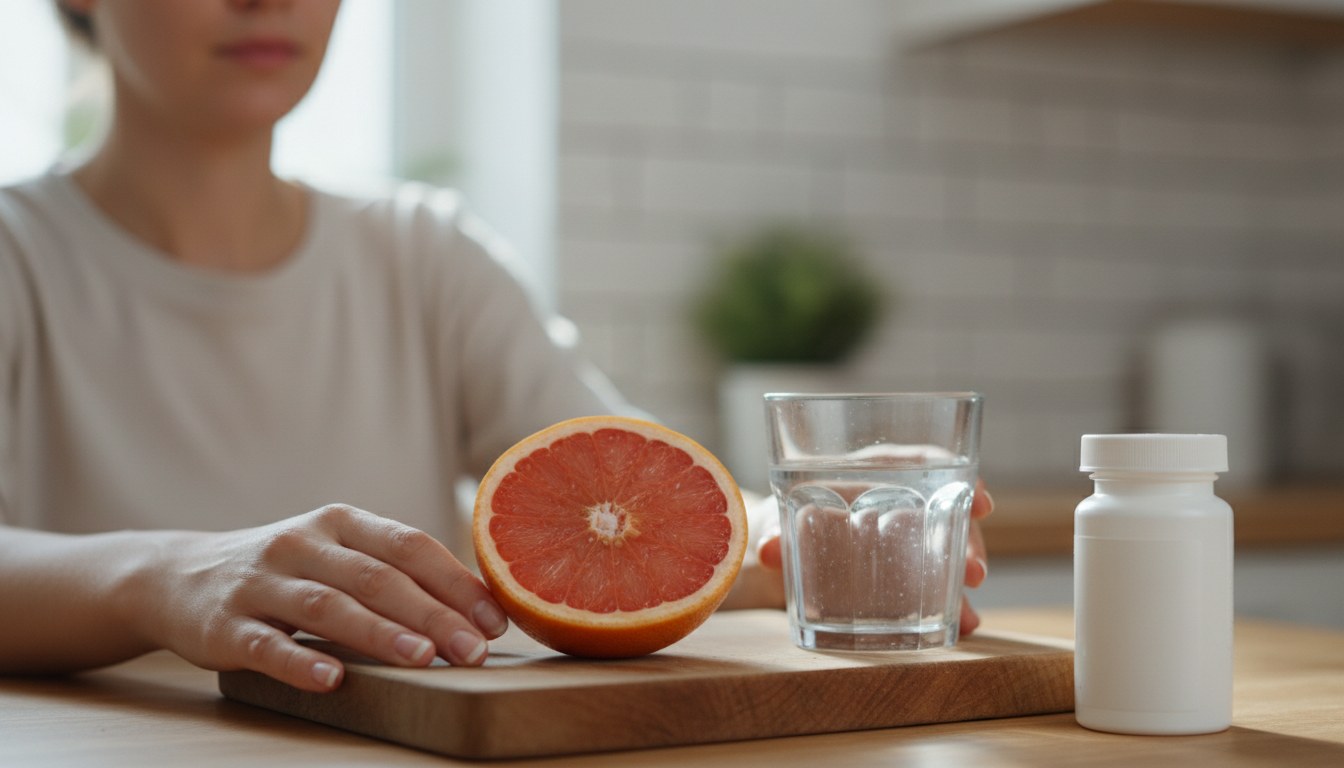
Written By: DocAi Health Editorial Team
Last Updated: 2026-07-28
Grapefruit and grapefruit juice can interfere with how the body breaks down certain medications, letting them build up to higher, potentially unsafe levels in the blood. This effect is well documented for specific statins, some blood pressure drugs, and a handful of other medications, but it does not apply to every drug or even every drug in the same class. Check your prescription label or ask your pharmacist before assuming grapefruit is off limits for your specific medicine.
How It Works
The mechanism: Grapefruit contains natural compounds called furanocoumarins that block an enzyme in the small intestine (CYP3A4) whose normal job is to break down many medications before they fully enter the bloodstream. When that enzyme is blocked, more of the drug gets absorbed than the dose was designed to allow, so blood levels can climb higher than intended.
How long the effect lasts: This is not a same-moment reaction that fades quickly. The enzyme needs time to recover, so grapefruit eaten or drunk hours before a dose, or even the day before, can still affect how much medication ends up in the bloodstream.
What counts as grapefruit: Whole grapefruit, grapefruit juice, and grapefruit-flavored supplements can all trigger the interaction. Related citrus fruits such as Seville (sour) oranges, pomelos, and tangelos work through the same pathway and are generally treated the same way. Ordinary sweet oranges, orange juice, lemons, and limes do not share this effect.
Who It's For
People on certain statins: Simvastatin and lovastatin have the strongest, most consistent grapefruit interaction. Atorvastatin can also be affected, usually to a lesser degree. Pravastatin, rosuvastatin, and fluvastatin are not meaningfully affected by grapefruit, which makes them a common alternative for people who don't want to give up the fruit.
People on certain blood pressure medications: Some calcium channel blockers, including felodipine and nifedipine, have a well documented grapefruit interaction. Not every drug in this class reacts the same way, so the specific medication name matters more than the general category.
People on anti-rejection or immune-suppressing drugs: Cyclosporine and tacrolimus, commonly used after organ transplants, can reach unsafe levels when combined with grapefruit.
People on certain anti-anxiety or sedative medications: Buspirone and some benzodiazepines, such as midazolam and triazolam, can become stronger and longer lasting with grapefruit.
A less obvious group: people taking fexofenadine, a non-drowsy antihistamine, may get less benefit from their medication if they take it with grapefruit juice, because grapefruit can reduce how much of this particular drug the body absorbs. That is the opposite problem: a weaker dose rather than a stronger one.
Common Side Effects
From statins: Unexplained muscle aches, tenderness, or weakness are the main warning sign, since higher statin levels raise the risk of muscle breakdown and added strain on the liver.
From calcium channel blockers: Excess drug levels can cause more pronounced low blood pressure, lightheadedness, flushing, headache, or swelling in the ankles and feet.
From immunosuppressants: Signs of levels running too high include tremor, headache, and reduced kidney function, which often shows up on routine blood work before it is something you would feel.
From sedative-type medications: Excess drowsiness, slowed breathing, or trouble with coordination can point to a level that climbed higher than expected.
These effects come from the interaction pushing a normal dose into a higher-than-intended range. They are not a separate list of side effects to memorize on top of the medication's usual profile, they are the same side effects showing up more strongly or more often than expected.
Drug and Food Interactions
The short answer: Grapefruit, whether fresh, juiced, or taken as an extract, should generally be avoided with simvastatin, lovastatin, felodipine, cyclosporine, tacrolimus, buspirone, and several other medications broken down by the CYP3A4 enzyme, unless a doctor or pharmacist has specifically said your exact drug and dose are fine.
Not every drug in a class is affected the same way: Two medications that treat the same condition can behave completely differently with grapefruit. Simvastatin has a strong interaction while pravastatin essentially has none, even though both are statins. This is why checking the specific drug name on your bottle, or asking your pharmacist directly, matters more than assuming a whole category of medicine is safe or unsafe.
Timing does not reliably fix it: Spacing grapefruit and medication a few hours apart does not reliably prevent the interaction for drugs known to be affected, because the enzyme blockage can persist well beyond that window. For a medication with a known interaction, avoiding grapefruit entirely is the safer approach rather than trying to time around it.
Read the label first: Many prescription bottles and package inserts for affected drugs carry a specific grapefruit warning. If you don't see one and you're unsure, ask the pharmacist when you pick up a new prescription, since this is one of the fastest questions a pharmacist can answer.
Supplements and combination products count too: Grapefruit seed extract and grapefruit-flavored supplements can carry the same risk as the fruit or juice, so "extract" or "flavored" does not mean interaction-free.
What to Ask Your Doctor
Ask about your specific drug: "Does this exact medication interact with grapefruit, and if so, how serious is it?" is more useful than asking about the drug class in general.
Ask about alternatives: If you eat grapefruit regularly and your medication has a strong interaction, ask whether a different drug in the same class, one without the interaction, could work just as well for you.
Ask what to do if it already happened: If you have been taking a medication and drinking grapefruit juice regularly without knowing about the interaction, tell your doctor or pharmacist. They can check whether any monitoring, such as a blood test, is needed.
Don't stop a prescribed medication on your own: If you're worried about an interaction, call your doctor or pharmacist rather than skipping or stopping the drug, since stopping some medications abruptly carries its own risks.
When to Seek Medical Care
When to Seek Urgent or Emergency Care
A grapefruit-drug interaction is rarely an emergency by itself, but the medications involved can become dangerous when their levels climb too high. This guidance is in addition to, not a replacement for, the general disclaimer above.
Emergency, call 911 or go to the emergency room immediately if:
- You have severe, unexplained muscle pain or weakness along with dark or cola-colored urine (possible muscle breakdown from statin toxicity).
- You feel faint, or your heart is racing, pounding irregularly, or beating unusually slowly, especially with dizziness or shortness of breath.
- You have signs of a severe allergic reaction, such as swelling of the face, lips, or throat, difficulty breathing, or widespread hives.
- You develop confusion, severe drowsiness, or slowed and difficult breathing after taking a sedative-type medication, or you cannot be easily woken.
- You believe you or someone else took a large or unknown amount of medication along with grapefruit and are unsure what to do. Call Poison Control at 1-800-222-1222 for guidance, or call 911 if symptoms are severe.
See a doctor soon (same-day or next available appointment) if:
- You notice new or worsening muscle aches, tenderness, or weakness after starting a statin while also eating or drinking grapefruit regularly.
- You develop new swelling in your ankles or feet, unusual flushing, or headaches after taking a calcium channel blocker along with grapefruit.
- You take an anti-rejection medication such as cyclosporine or tacrolimus and notice any new or unexplained symptoms, since these drug levels are usually followed closely with blood tests.
- You've been combining grapefruit with a medication for a while and want to confirm whether it's actually a concern for your specific drug.
Frequently Asked Questions
Can I drink orange juice instead of grapefruit juice if I'm on an affected medication?
Yes. Ordinary sweet oranges and orange juice do not contain the same furanocoumarin compounds and have not been shown to cause this interaction. Seville (sour) oranges, pomelos, and tangelos do share the effect and should be treated like grapefruit.
How long does grapefruit's effect on medication last?
Longer than most people expect. The enzyme grapefruit blocks takes time to recover, so the effect can carry over from a fruit or juice consumed the day before a dose, not just from the same meal as the pill.
Does grapefruit affect all statins the same way?
No. Simvastatin and lovastatin have the strongest interaction, atorvastatin can be affected to a lesser degree, and pravastatin, rosuvastatin, and fluvastatin are generally considered safe with grapefruit. Check with your pharmacist about your specific statin.
Is a small amount of grapefruit, like a few segments, safe with my medication?
For medications with a known strong interaction, even a small amount can be enough to affect blood levels, so eating just a little is not a reliable safety strategy. Ask your pharmacist whether your specific drug and dose allow any amount at all.
Can I have grapefruit with blood thinners like warfarin?
Grapefruit is not among the well established major interactions for warfarin the way it is for certain statins or calcium channel blockers, but anyone on a blood thinner should still confirm with their doctor or pharmacist, since warfarin interacts with many foods and supplements.
What should I do if I already had grapefruit before realizing it interacts with my medication?
Contact your doctor or pharmacist and describe what you took and when. They can tell you whether monitoring or a blood test is needed, and whether to take, skip, or delay your next dose.
Are grapefruit supplements or grapefruit seed extract safer than the fruit itself?
No. Grapefruit seed extract and grapefruit-flavored supplements can carry the same interaction risk as the whole fruit or juice, so they should be treated with the same caution.
Related articles
Atorvastatin (Statins)AmlodipineWhat to do if you miss a dose of your blood pressure pillSources
- U.S. Food and Drug Administration (FDA) - Grapefruit Juice and Some Drugs Don't Mix
- MedlinePlus (National Library of Medicine, NIH) - Drug Reactions
- Mayo Clinic - Grapefruit: Beware of dangerous medication interactions
- American Heart Association: Statin and blood pressure medication safety.
- National Institutes of Health (NIH) - Biochemistry, Cytochrome P450