What A1C Goal Makes Sense for an Older Adult With Diabetes?
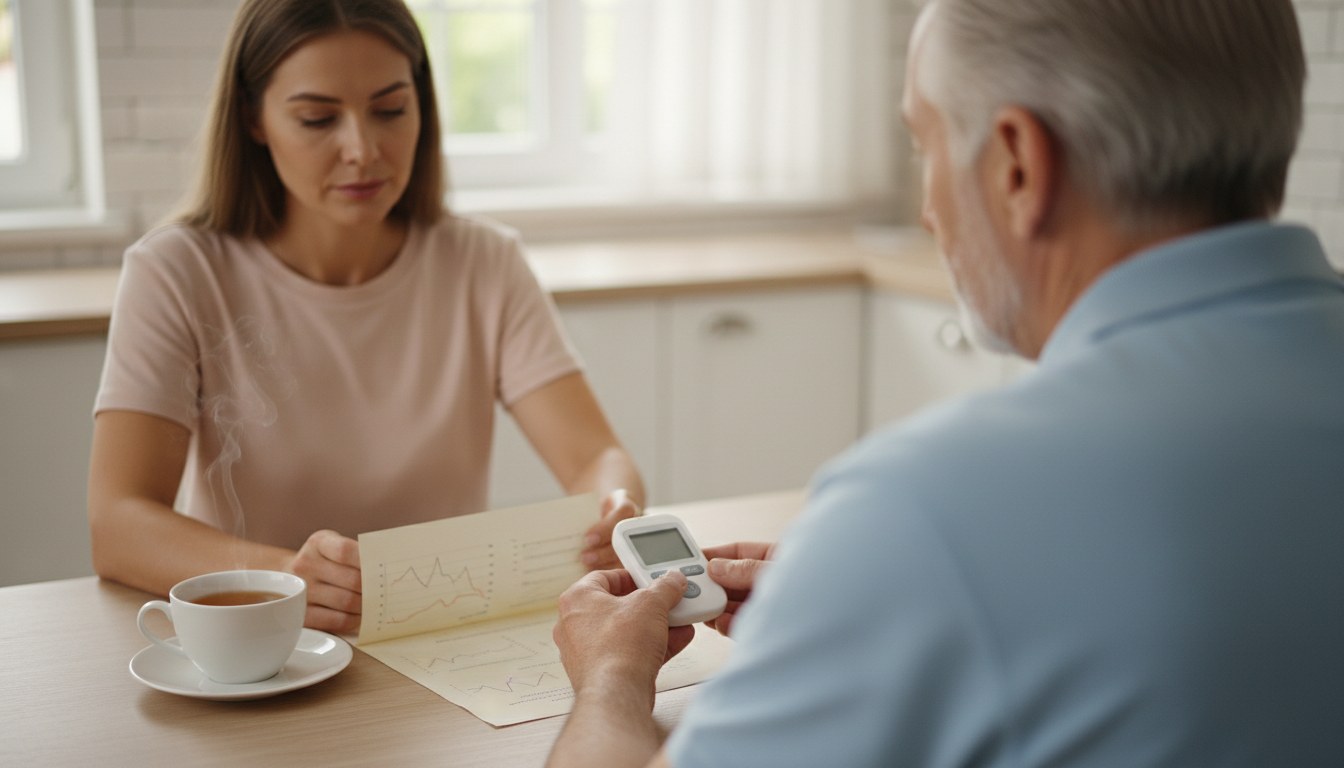
The A1C goal for an older adult with diabetes depends on overall health and personal priorities rather than on age by itself. A tighter goal often suits an active person with few other conditions and a low risk of low blood sugar.
Written By: DocAi Health Editorial Team
Last Updated: 2026-10-03
The A1C goal for an older adult with diabetes depends on overall health and personal priorities rather than on age by itself. A tighter goal often suits an active person with few other conditions and a low risk of low blood sugar. A looser goal is often chosen for someone with several chronic illnesses, memory problems, frailty, or a history of lows. This article explains what A1C measures, how goals are individualized, and what can distort the number.
What an A1C goal for older adults with diabetes is meant to do
A1C reflects your average blood sugar over roughly the past two to three months. According to MedlinePlus, the test is one of the main tools used to follow how well diabetes is controlled over time. A goal is the range you and your clinician aim for so that you lower the risk of long-term complications without causing harm from the treatment itself.
In younger adults, the balance often leans toward lowering the number. In older adults, the balance shifts, because the harms of overtreatment can arrive sooner than the benefits of tight control. Complications such as eye, kidney and nerve damage usually develop over many years. Low blood sugar, falls and confusion can happen in a single afternoon.
Why one number does not fit every older adult
"Older adult" covers a wide group. A healthy 72-year-old who walks daily and a 86-year-old living in assisted care with heart failure and memory loss have very different needs. Clinical guidance for this age group generally encourages individualized goals. Many guidance documents for older adults describe a goal below about 7.0 to 7.5% for healthy people, below about 8.0% for people with several chronic illnesses or mild thinking changes, and, for people in very complex or poor health, less reliance on A1C and more focus on avoiding both symptoms of high sugar and low blood sugar. Your clinician chooses the tier that fits you.
The American Association of Clinical Endocrinology comprehensive care plan guideline describes a goal near the normal range, about 6.5% or lower, only for people in whom it can be reached safely. It is not a default target for frail older adults or for people who have had lows, and aiming for it in those situations may raise the risk of harm.
A review of glycemic guidelines in frail older adults, published in PubMed Central, discusses the same tension: the evidence for tight control is stronger in people with a long life expectancy and weaker in people who are frail. The review also raises concerns that strict targets in frail people may expose them to treatment harms with limited added benefit.
Factors clinicians weigh when choosing a goal
- Other health conditions: heart disease, kidney disease, lung disease, cancer or advanced liver disease can shift the goal.
- Thinking and memory: a person who may forget doses or misjudge a symptom is at higher risk with intensive treatment.
- Function and frailty: trouble with bathing, dressing, managing medicines or walking can favor a looser target.
- Hypoglycemia history: a prior severe low, or lows with no warning symptoms, often leads to a less strict goal.
- Medicines: insulin and sulfonylurea pills can lower blood sugar too far. Some other diabetes medicines carry less risk of lows on their own.
- Living situation and support: living alone, limited vision, or no one to check in can change how safe a tight goal is.
- Personal priorities: some people value avoiding hospital stays and staying independent over reaching a specific number.
How goals are often framed in different situations
The table below describes the general pattern in words. Your clinician sets the actual number for you, and it can change over time.
| Situation | How the goal is often approached |
|---|---|
| Generally healthy, active, few other conditions, low risk of lows | A tighter goal is often reasonable if it can be reached without lows. |
| Several chronic conditions or mild thinking changes | A moderately relaxed goal is often chosen. |
| Frailty, advanced illness, significant memory loss, or limited life expectancy | A looser goal is often chosen, with more focus on avoiding lows and symptoms of very high sugar. |
| History of severe low blood sugar | The goal is often loosened and the medicines reviewed. |
Surveys of people with type 2 diabetes, such as the multinational study on individualized HbA1c goals in PubMed Central, suggest that many patients are unaware of their own goal. Asking "What is my A1C goal, and why?" at your next visit is a reasonable way to close that gap.
Reading your A1C result without over-reading it
A1C is an average, so it can hide swings. Someone with frequent lows and frequent highs can end up with the same A1C as someone with steady, moderate readings. Looking at the number together with meter or sensor readings gives a fuller picture.
Several conditions can make A1C less accurate. Anemia, recent blood loss or transfusion, advanced kidney disease and some inherited hemoglobin variants can push the result up or down. These situations are common in older adults. If your A1C does not match your home readings, tell your clinician so they can decide whether another measure, such as meter readings, a continuous glucose monitor or a different lab test, would be more informative.
Diagnosis and ranges for people without diabetes are covered in other articles on this site, including the one on what a normal A1C result is. This page focuses on goals for people who already have a diabetes diagnosis.
Why a lower number is not automatically better
MedlinePlus describes hypoglycemia as blood sugar that drops too low, and notes it can cause shakiness, sweating, confusion and, when severe, loss of consciousness. In older adults, lows can be subtle. Instead of the classic shaky, sweaty feeling, a low may show up as sudden confusion, unusual sleepiness, a fall, or behavior that looks like dementia or a stroke. Some people lose the early warning signs altogether.
Lows can lead to falls, fractures, car crashes and hospital visits. Because of this, an A1C that has dropped well below the goal on insulin or a sulfonylurea is a reason to talk to the prescriber, not a reason to celebrate. A related article on this site explains why low blood sugar is more dangerous for older adults with diabetes.
If you take insulin or a sulfonylurea
Insulin and sulfonylurea pills (such as glipizide, glimepiride and glyburide) carry the highest risk of low blood sugar among common diabetes medicines in older adults, and glyburide in particular is generally avoided in this age group. The risk can rise when appetite drops, kidney function declines, or another medicine is added. Do not change the timing or dose of any prescription on your own. If you have had lows, or your A1C is lower than your goal, tell the prescriber so they can decide whether a dose change or a different medicine is appropriate. Do not stop checking your blood sugar if your clinician has recommended it.
SGLT2 inhibitors, another group of diabetes medicines, can cause dehydration and, uncommonly, diabetic ketoacidosis even when blood sugar is not very high. Ask the prescriber or pharmacist about the label warnings for any medicine you take.
What to do for a low
MedlinePlus describes treating a low with about 15 grams of fast-acting carbohydrate, such as juice or glucose tablets, then rechecking blood sugar after 15 minutes and repeating if it is still low. Use this only if the person is awake and able to swallow. If your clinician has prescribed glucagon, a caregiver can give it to someone who cannot swallow and then call 911. Lows from a sulfonylurea or long-acting insulin can return hours after the first recovery, so ask your clinician how long to keep watching and checking.
Why a goal that is too loose also matters
A relaxed goal does not mean ignoring diabetes. Persistently high blood sugar can cause increased thirst, frequent urination, dehydration, blurred vision, weight loss, fatigue and a higher risk of infections. MedlinePlus lists eye, kidney, nerve and heart problems among the complications of diabetes. Even with a looser A1C goal, the aim is to avoid symptoms of high sugar, avoid dehydration, and protect organs as far as is safe.
Blood pressure, cholesterol, kidney checks and foot and eye exams continue to matter regardless of the A1C goal. Kidney problems can go unnoticed for a long time in older adults, which is covered in a separate article on chronic kidney disease. The urine albumin-to-creatinine ratio test is another piece of diabetes follow-up on this site.
Everyday steps that can help you reach a safe goal
- Keep regular meals. Skipped meals can raise the risk of lows for people on insulin or sulfonylureas.
- Stay active in ways that suit you. MedlinePlus offers guidance on exercise for older adults, including balance and strength activities. Ask your clinician about what is safe with your conditions and medicines.
- Bring your meter, sensor or log to visits. Patterns, such as morning highs or afternoon lows, often matter more than a single reading.
- Keep a current medicine list. More medicines can mean more interactions, and polypharmacy is a common issue in older adults. A related article on this site covers it in detail.
- Involve a family member or caregiver. They can learn the signs of a low and what to do.
- Revisit the goal as health changes. A new diagnosis, hospital stay, weight loss or decline in memory can be a reason to reset it.
Questions to bring to your next appointment
- What is my A1C goal, and what is it based on?
- Is any of my medicine likely to cause low blood sugar, and what should I do if it happens?
- Could anything, such as anemia or kidney disease, be affecting the accuracy of my A1C?
- How often should my A1C be checked, and should I use a meter or sensor between tests?
- Under what circumstances would we change the goal?
Signs that your plan may need attention
Repeated lows, unexplained falls, new confusion, ongoing weight loss, or symptoms of high sugar such as heavy thirst and frequent urination are reasons to contact your clinician. Sudden confusion, trouble speaking, face drooping or weakness on one side need emergency care even if low blood sugar seems possible, because stroke and low blood sugar can look alike. The emergency box below lists what to act on right away.
When to Seek Medical Care
When to Seek Urgent or Emergency Care
Older adults with diabetes can become dangerously ill from very low or very high blood sugar, and these emergencies can look like stroke or dementia. Use the lists below to decide how fast to act. This guidance is in addition to, not a replacement for, the general disclaimer above.
Emergency, call 911 or go to the emergency room immediately if:
- Call 911 if a person with diabetes cannot be woken, is having a seizure, or cannot safely swallow juice or glucose because of low blood sugar. A caregiver can give prescribed glucagon while waiting.
- Call 911 for sudden face drooping, arm or leg weakness, trouble speaking, sudden confusion, severe headache or sudden vision loss, even if low blood sugar might be the cause, because stroke needs emergency treatment.
- If a person with diabetes has new confusion and a meter shows a low, give 15 grams of fast-acting sugar if they can swallow and recheck in 15 minutes, and call 911 if they are not clearly better. If the reading is not low, cannot be checked, or other stroke signs are present, call 911 now.
- Call 911 for chest pain or pressure, or sudden shortness of breath, which can be a heart attack in an older adult with diabetes.
- Call 911 for high blood sugar with repeated vomiting, abdominal pain, fast or deep breathing, severe drowsiness or confusion. Nausea, vomiting, abdominal pain or deep breathing in someone taking an SGLT2 inhibitor also needs 911 even if blood sugar is only mildly raised, because ketoacidosis can occur with near-normal readings.
- Call 911 for a low blood sugar episode that does not improve after treatment with 15 grams of fast-acting sugar and a recheck, or that keeps coming back and leaves the person very drowsy.
See a doctor soon (same-day or next available appointment) if:
- Contact your clinician the same day if you have had a low blood sugar episode and recovered, so the cause and your medicines can be reviewed.
- Seek same-day care for heavy thirst, frequent urination, dizziness or blurred vision with high readings that stay high on repeated checks.
- Call the same day after a fall or new unsteadiness with no head injury and normal alertness in someone who takes insulin or a sulfonylurea, since a low may have contributed.
- Make an appointment soon if your A1C result and home readings do not seem to match, or if your A1C is well below your goal while on glucose-lowering medicine.
- Schedule a visit if you are losing weight without trying, skipping meals because of poor appetite, or having trouble managing your medicines.
Frequently Asked Questions
What is a good A1C for a 75-year-old with diabetes?
There is no single number. Many guidance documents for older adults describe below about 7.0 to 7.5% for healthy people, below about 8.0% for those with several illnesses or mild thinking changes, and less reliance on A1C in very poor health. Ask your clinician what your goal is and why, and whether it should change as your health does.
Is an A1C below 7% too low for an older adult?
It depends on your health and medicines. For a healthy person on medicines that rarely cause lows, a lower number may be reasonable. For someone on insulin or a sulfonylurea, or with frailty, a very low A1C may signal overtreatment. Tell your prescriber so they can decide whether changes are appropriate.
Why would my doctor want a higher A1C goal for me?
A looser goal can lower the chance of low blood sugar, falls and hospital visits, which can matter more than long-term complications for someone with other serious conditions. It does not mean diabetes is being ignored. You can still be treated for symptoms of high blood sugar and protected with blood pressure, kidney and foot care.
How often should an older adult have an A1C test?
Frequency varies with how stable your diabetes is, whether treatment has recently changed, and your clinician's judgment. A test is often done more often after a medicine change or when readings are off target. Ask your clinician what schedule fits you, and whether home readings should be checked in between.
Can anemia or kidney disease make my A1C wrong?
Yes, they can. Anemia, recent blood loss or transfusion, advanced kidney disease and some inherited hemoglobin variants can make A1C read higher or lower than your true average. If your A1C does not match your meter or sensor readings, tell your clinician so they can consider other ways to track your sugar.
What are signs of low blood sugar in older adults?
Symptoms can include shakiness, sweating, hunger, and a fast heartbeat, but older adults may instead have sudden confusion, unusual sleepiness, weakness, a fall or odd behavior. Some people have no warning symptoms. If the person can swallow, treat a low with 15 grams of fast-acting sugar and recheck in 15 minutes. Call 911 if they cannot be woken or swallow, or are not clearly improving.
Should I lower my medicine if my A1C is under my goal?
Do not change the dose or timing of a prescription on your own. Contact the prescriber, share your readings and any lows, and let them decide whether an adjustment is appropriate. Keep checking your blood sugar if your clinician has recommended it, since those readings help guide the decision.
Does exercise change what A1C goal is safe?
Physical activity can help blood sugar control and strength, but it can also lower blood sugar, especially with insulin or sulfonylureas. Tell your clinician about your activity so they can advise on safe types, snacks and monitoring. Balance and strength exercises can also lower fall risk, which matters for older adults.
Related articles
Why Is Low Blood Sugar More Dangerous for Older Adults With Diabetes?Why Chronic Kidney Disease Often Goes Undiagnosed in Older AdultsUnderstanding Polypharmacy in Older Adults: Risks and SolutionsSources
- MedlinePlus (NIH) - Diabetes
- MedlinePlus (NIH) - Hypoglycemia
- MedlinePlus (NIH) - Diabetes Complications
- MedlinePlus (NIH) - Exercise for Older Adults
- PubMed Central (NIH) - American Association of Clinical Endocrinology Clinical Practice Guideline: Developing a Diabetes Mellitus Comprehensive Care Plan-2022 Update
- PubMed Central (NIH) - The risks and benefits of implementing glycemic control guidelines in frail older adults with diabetes mellitus
- PubMed Central (NIH) - Individualized HbA(1c) Goals, and Patient Awareness and Attainment of Goals in Type 2 Diabetes Mellitus: A Real-World Multinational Survey