Understanding a Complete Blood Count (CBC)
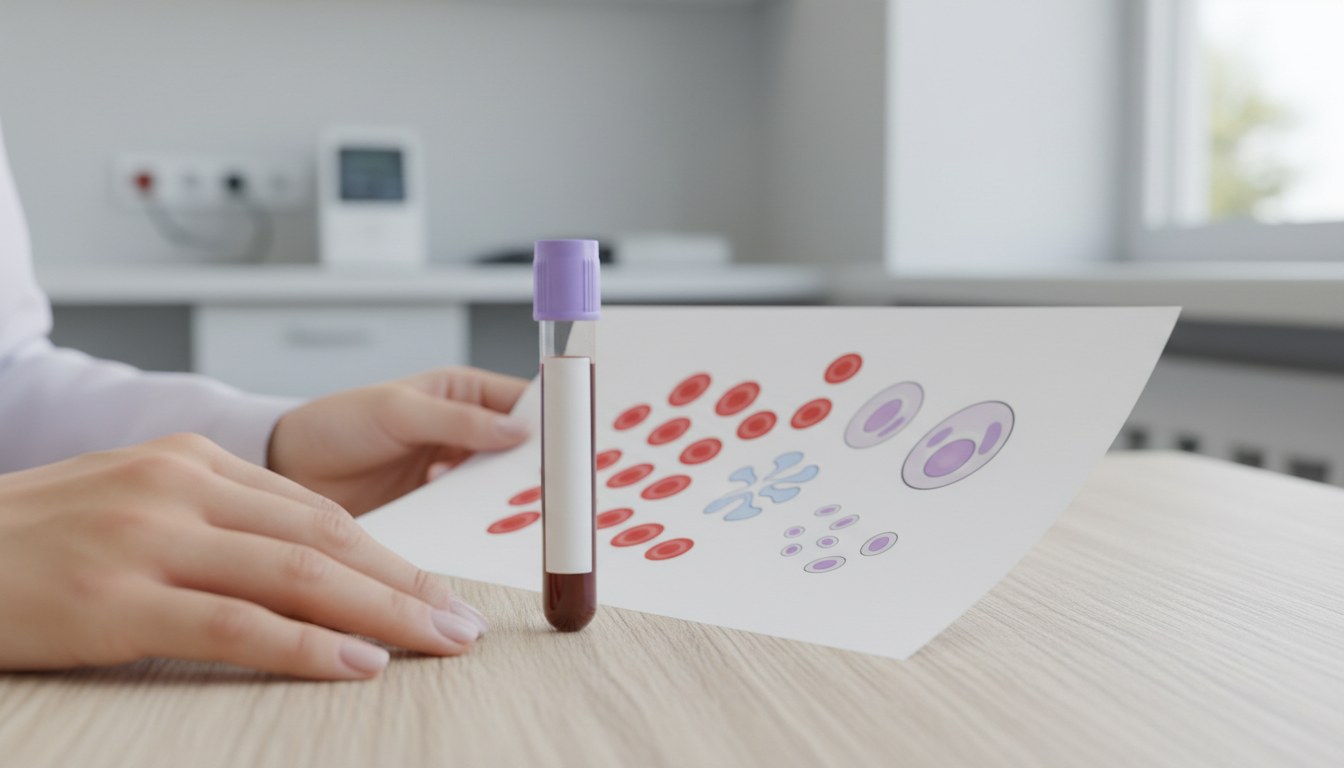
A complete blood count (CBC) is one of the most commonly ordered blood tests in medicine. It provides a snapshot of the three main types of cells circulating in your blood, red blood cells, white blood cells, and platelets, along with several key measurements derived from each category.
Written By: DocAi Health Editorial Team
Last Updated: 2026-07-13
A complete blood count (CBC) is one of the most commonly ordered blood tests in medicine. It provides a snapshot of the three main types of cells circulating in your blood, red blood cells, white blood cells, and platelets, along with several key measurements derived from each category. A CBC is used as part of routine health screenings, to evaluate symptoms like fatigue and infection, to monitor chronic conditions, and to guide treatment decisions. This guide explains each component and what abnormal values typically mean.
Red Blood Cell (RBC) Components
Red Blood Cell Count (RBC)
What it measures: The number of red blood cells per microliter of blood. Red blood cells carry oxygen from the lungs to the rest of the body using a protein called hemoglobin.
Normal range: Approximately 4.5-5.5 million cells/µL in men; 4.0-5.0 million cells/µL in women (values vary slightly by laboratory).
Low RBC (anemia): Can result from iron deficiency, B12 or folate deficiency, chronic disease, kidney disease, blood loss, or bone marrow problems. Causes fatigue, pale skin, and shortness of breath.
High RBC (polycythemia): Can result from dehydration (relative), living at high altitude, chronic lung disease, or polycythemia vera (a rare bone marrow condition).
Hemoglobin (Hgb)
What it measures: The total amount of the oxygen-carrying protein hemoglobin in the blood. Hemoglobin is the iron-containing protein inside red blood cells that binds oxygen.
Normal range: Approximately 13.5-17.5 g/dL in men; 12.0-15.5 g/dL in women.
Low hemoglobin: The primary marker of anemia. Causes fatigue, dizziness, pale skin, shortness of breath, and poor exercise tolerance.
High hemoglobin: Associated with dehydration, polycythemia vera, or chronic low oxygen states (COPD, smoking, high altitude).
Hematocrit (Hct)
What it measures: The percentage of blood volume made up by red blood cells. Closely parallels hemoglobin levels.
Normal range: Approximately 41-53% in men; 36-46% in women.
Mean Corpuscular Volume (MCV)
What it measures: The average size of red blood cells, an important clue for identifying the type of anemia.
Normal range: Approximately 80-100 femtoliters (fL).
Low MCV (microcytic anemia): Small red cells, most commonly caused by iron deficiency or thalassemia.
High MCV (macrocytic anemia): Large red cells, most commonly caused by vitamin B12 or folate deficiency, or liver disease. Also seen with hypothyroidism and alcohol use.
White Blood Cell (WBC) Components
White Blood Cell Count (WBC)
What it measures: The total number of white blood cells, which are the immune system's primary fighting force.
Normal range: Approximately 4,500-11,000 cells/µL.
High WBC (leukocytosis): Most commonly signals infection, inflammation, or stress. Can also indicate leukemia in extreme elevations or with abnormal cell types.
Low WBC (leukopenia): Associated with viral infections, bone marrow suppression (from medications, chemotherapy), HIV, or autoimmune conditions. Increases infection risk.
WBC Differential
The differential breaks the white cell count into specific cell types, each with different immune functions:
| Cell Type | Normal % | Elevated Suggests | Low Suggests |
|---|---|---|---|
| Neutrophils | 50-70% | Bacterial infection, stress | Viral infections, medication effects |
| Lymphocytes | 20-40% | Viral infections, lymphoma | HIV, steroid use, severe illness |
| Monocytes | 2-8% | Chronic infection, autoimmune disease | Rare |
| Eosinophils | 1-4% | Allergic conditions, parasitic infection | Steroid use |
| Basophils | 0.5-1% | Allergic reactions, certain leukemias | Rarely clinically significant |
Platelet Components
Platelet Count
What it measures: The number of platelets, tiny cell fragments that are essential for blood clotting.
Normal range: Approximately 150,000-400,000 platelets/µL.
Low platelets (thrombocytopenia): Can cause prolonged bleeding, easy bruising, and petechiae (small red dots on the skin). Causes include viral infections, ITP (immune thrombocytopenic purpura), certain medications, bone marrow problems, or liver disease.
High platelets (thrombocytosis): Often a reactive response to infection, inflammation, iron deficiency, or recent surgery. Rarely, it indicates an underlying blood disorder (essential thrombocythemia).
When a CBC Result Is Abnormal
A single abnormal value on a CBC is rarely enough to make a diagnosis, it provides a direction for investigation. For example, a low hemoglobin with a low MCV points toward iron-deficiency anemia and typically prompts iron studies (ferritin, serum iron, TIBC). A high white blood cell count with fever directs evaluation for infection. A provider integrates CBC results with your symptoms, history, and other test results to determine the appropriate next step.
When to Seek Medical Care
When to Seek Urgent or Emergency Care
Most abnormal CBC results are followed up with your provider on a routine or same-day basis. But a few specific combinations of symptoms and CBC findings can signal a medical emergency. This guidance is in addition to, not a replacement for, the general disclaimer above.
Emergency, call 911 or go to the emergency room immediately if:
- You have a fever (100.4°F/38°C or higher) and you know your white blood cell or neutrophil count is low (for example, from chemotherapy or a bone marrow condition). This can be neutropenic fever, a medical emergency that requires antibiotics right away.
- You have bleeding that does not stop when you apply firm pressure, or you notice many new bruises or petechiae (tiny red-purple dots) developing quickly, especially if you know your platelet count is low.
- You have chest pain, fainting or loss of consciousness, or severe shortness of breath at rest, especially if you know your hemoglobin is low. Severe anemia can strain the heart and, in serious cases, lead to arrhythmia or heart attack.
See a doctor soon (same-day or next available appointment) if:
- You have gradually worsening fatigue, pale skin, or shortness of breath with exertion (but not at rest).
- You notice new bruising without significant trauma, but without uncontrolled bleeding.
- You have recurring infections, prolonged illness, or other unexplained symptoms alongside an abnormal CBC result.
Frequently Asked Questions
Do I need to fast for a CBC?
No. A CBC does not require fasting. It is a simple blood draw that can be performed at any time of day.
What does it mean if my CBC is "within normal limits"?
It means all measured values fall within the laboratory's reference ranges, which generally indicates no significant anemia, infection, or platelet abnormality at the time of testing. It does not rule out all conditions, but it is reassuring for many common concerns.
Can a CBC detect cancer?
A CBC can detect abnormalities that may suggest blood cancers, such as very high or very low white blood cell counts, abnormal cell types, or severe unexplained anemia. However, a CBC alone cannot diagnose solid tumors (like lung or colon cancer). Further testing (biopsy, imaging, specific markers) is needed to diagnose cancer.
What causes anemia on a CBC?
Anemia on a CBC (low hemoglobin/hematocrit) has many possible causes: iron deficiency (most common), vitamin B12 or folate deficiency, chronic disease, kidney disease, hemolysis (red cell destruction), or bone marrow failure. The MCV and additional tests help narrow the cause.
How often should I have a CBC?
For most healthy adults, a CBC is included in periodic health screenings (every 1-3 years). More frequent testing is indicated if you have chronic conditions like kidney disease, are on medications affecting blood counts, or have symptoms warranting evaluation.
What is a CBC with differential?
A "CBC with differential" includes a breakdown of the five types of white blood cells (neutrophils, lymphocytes, monocytes, eosinophils, basophils), providing much more information about the immune response than the total WBC count alone.
Sources
- MedlinePlus (National Library of Medicine, NIH) - Complete Blood Count (CBC)
- Mayo Clinic - Complete blood count (CBC)
- National Heart, Lung, and Blood Institute (NIH) - Blood Tests
- American Society of Hematology - Blood Basics
- Centers for Disease Control and Prevention (CDC) - FastStats - Anemia